Search results: enzyme

Predicting the shape of a fat-lengthening enzyme to guide drug design

Predicting the shape of a fat-lengthening enzyme to guide drug design

Biochemistry • Chemistry • DIPC Biochemistry • Pharmacy • Quantum chemistry

By DIPC

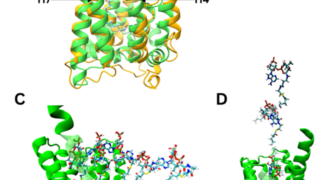
Fats do far more than store energy. They form the membranes that enclose every cell and act as chemical signals. Cells build and reshape them with enzymes, and one of these, ELOVL6, lengthens fatty acids by two carbon atoms. Embedded in the membrane of the endoplasmic reticulum, an internal network where many lipids are made […]
Huisgenases, new protein catalysts which are not enzymes

Huisgenases, new protein catalysts which are not enzymes

Chemistry • DIPC Biochemistry • Materials

By DIPC

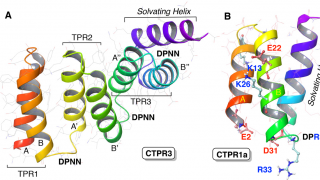
Proteins can perform a huge number of biological functions with amazing efficiency. In order to achieve these different functions, proteins rely on the precise 3D arrangement of functional groups which are referred to as the protein fold. Some of these functions include acting as a catalyst in biochemical reactions; in these cases proteins are called […]

Epigenetic reactivation of a tumor suppressor program in AML

Epigenetic reactivation of a tumor suppressor program in AML

Biomedicine

By Invited Researcher

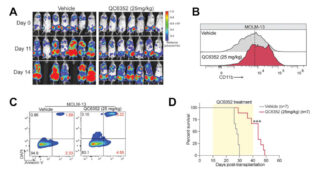
Inactivation of tumor suppressor genes (TSGs) confers a cellular fitness advantage to human cancer cells, including in acute myeloid leukemia (AML), where it disrupts myeloid differentiation and promotes leukemogenesis. Loss-of-function mutations in TSGs are frequently observed in patients with hematologic malignancies , driving disease progression by blocking differentiation and enhancing self-renewal. Therefore, restoration of tumor […]

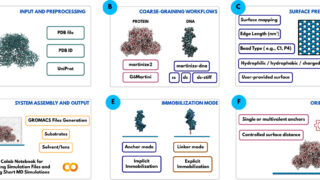
Overcoming bottlenecks in bio-interface simulations: The MartiniSurf Approach

Overcoming bottlenecks in bio-interface simulations: The MartiniSurf Approach

Biochemistry • Chemical engineering • Chemistry • DIPC Biochemistry • Food processing

By DIPC

Enzymes and other biomolecules are often anchored onto solid materials so they can be reused, purified more easily, and made more stable, a strategy biotechnology has relied on since industrial-scale immobilized enzymes first appeared in chemical manufacturing in the mid-twentieth century. Immobilized enzymes today drive processes from food and pharmaceutical production to biosensors and medical […]

Microbes in Antarctica survive the freezing and dark winter by living on air

Microbes in Antarctica survive the freezing and dark winter by living on air

Microbiology

By Invited Researcher

Author: Ry Holland, Research Fellow in Microbial Ecology, Monash University Winter in Antarctica is long and dark. Temperatures remain well below freezing. In many places, the Sun sets in April and does not rise above the horizon again until August. Without sunlight, photosynthetic life such as plants, mosses and algae cannot make energy. But that’s […]

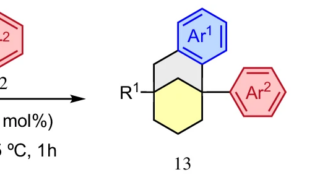
Challenging Bredt’s rule

Challenging Bredt’s rule

Chemistry • DIPC Biochemistry

By DIPC

In the world of organic chemistry, some rules are taught as absolute boundaries. One of the most famous is Bredt’s rule, a guideline that has dictated the limits of molecular architecture for nearly a century. This rule essentially places a “keep off the grass” sign on certain parts of a molecule, specifically forbidding the formation […]

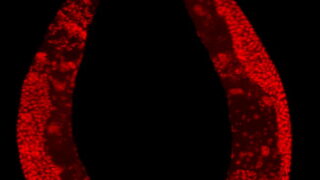
Your longevity may be tied to your parents, but not directly through DNA

Your longevity may be tied to your parents, but not directly through DNA

Genetics

By Rosa García-Verdugo

Could your parents’ lifestyle choices affect how long you live? And could this effect not be directly related to your genes? Scientists studying my favourite roundworm (C. elegans) have discovered a surprising answer: yes, they can. Why does the offspring live longer? Researchers at HHMI’s Janelia Research Campus made an unexpected discovery while studying aging […]

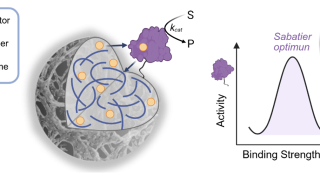
The sweet spot of self-sufficient heterogeneous biocatalysts

The sweet spot of self-sufficient heterogeneous biocatalysts

Biochemistry • Biotechnology • Catalysis • Chemical engineering • Chemistry

By Invited Researcher

Authors: Fernando López-Gallego, Principal Investigator, Ikerbasque Professor and group leader at the Heterogeneous Biocatalysis Laboratory at CIC biomaGUNE; Ainhoa Oliden-Sánchez, Postdoctoral Researcher at the Heterogeneous Biocatalysis Laboratory at CIC biomaGUNE; Clara García-Gorro, Science Communication Manager at CIC biomaGUNE. Self-sufficient heterogeneous biocatalysts are emerging as powerful tools for greener, more efficient chemical manufacturing. By cleverly combining […]

Mitigating health risks through targeted microbial interventions

Mitigating health risks through targeted microbial interventions

Biotechnology • Chemical engineering • Food processing • Microbiology • Molecular biology

By Invited Researcher

Biogenic amines (BAs) are nitrogenous compounds formed primarily by microbial decarboxylation of amino acids. In food products, they can accumulate to levels that pose health risks, including histamine poisoning and hypertensive crises due to tyramine ingestion . Fermented foods, particularly cheeses, are significant sources of BAs due to their complex microbial consortia and the metabolic […]