Search results: marta irigoyen

Epigenetic reactivation of a tumor suppressor program in AML

Epigenetic reactivation of a tumor suppressor program in AML

Biomedicine

By Invited Researcher

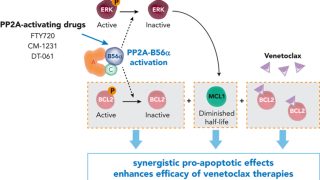
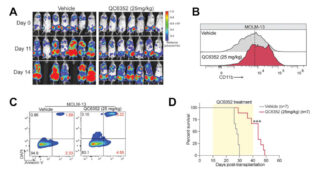
Inactivation of tumor suppressor genes (TSGs) confers a cellular fitness advantage to human cancer cells, including in acute myeloid leukemia (AML), where it disrupts myeloid differentiation and promotes leukemogenesis. Loss-of-function mutations in TSGs are frequently observed in patients with hematologic malignancies , driving disease progression by blocking differentiation and enhancing self-renewal. Therefore, restoration of tumor […]
Enhanced BCMA – CAR T-cell therapeutic efficacy in multiple myeloma

Enhanced BCMA – CAR T-cell therapeutic efficacy in multiple myeloma

Biomedicine

By Invited Researcher

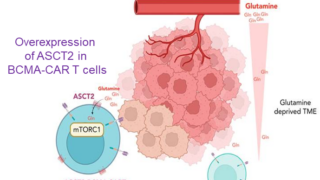
Chimeric antigen-specific receptor (CAR) T-cell immunotherapy targeting B-cell maturation antigen (BCMA; BCMA-CAR T cells) has produced remarkable clinical responses in advanced multiple myeloma (MM), with a substantial fraction of patients achieving complete remission . However, many patients relapse within months, largely due to insufficient CAR T-cell persistence, a recognized mechanism of acquired resistance . A […]

PIM1 Activation in T-ALL: A Therapeutic Vulnerability

PIM1 Activation in T-ALL: A Therapeutic Vulnerability

Biomedicine

By Invited Researcher

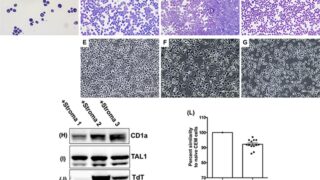
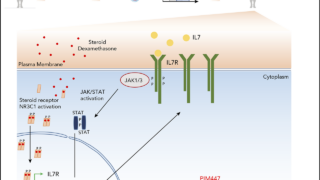
T-cell acute lymphoblastic leukemia (T-ALL) and T-cell acute lymphoblastic lymphoma (T-LBL) are aggressive hematological malignancies that arise from abnormal activation of oncogenes and/or inactivation of tumor-suppressor genes, followed by a differentiation arrest and uncontrolled clonal expansion of immature thymocytes . Proviral integration site for Moloney-murine leukemia 1 (PIM1) is a known JAK-STAT target gene that […]

Targeting WDR5/ATAD2 signaling by the CK2/IKAROS axis demonstrates therapeutic efficacy in T-ALL

Targeting WDR5/ATAD2 signaling by the CK2/IKAROS axis demonstrates therapeutic efficacy in T-ALL

Biomedicine

By Invited Researcher

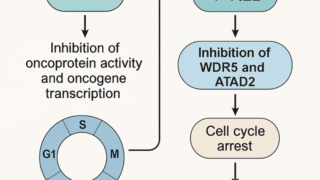
T-cell acute lymphoblastic leukemia (T-ALL) is an aggressive hematological malignancy with a poor prognosis and limited options for targeted therapies . Since the targeted therapies benefiting T-ALL are still limited owing to the biological heterogeneity of T-ALL , identifying novel “druggable” molecular markers and illustrating the underlying mechanisms are immediate pressing issues in T-ALL […]

DEK::NUP214 acts as an XPO1-dependent transcriptional activator of essential leukemia genes

DEK::NUP214 acts as an XPO1-dependent transcriptional activator of essential leukemia genes

Biomedicine

By Invited Researcher

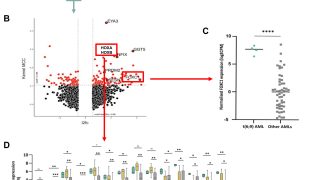
Acute myeloid leukemia (AML) with t(6;9)/DEK::NUP214 is recognized as a separate entity in the World Health Organization classification of myeloid neoplasms, accounting for 1% of all AML cases and characterized by a high relapse rate and young age at diagnosis . The t(6;9) chromosomal rearrangement results in the fusion of almost the entire peptide sequence […]

Biomarkers of chemoresistant leukemic cells in human T-ALL

Biomarkers of chemoresistant leukemic cells in human T-ALL

Biomedicine

By Invited Researcher

T-cell acute lymphoblastic leukemia (T-ALL) is characterized by the accumulation of genetic lesions that induce differentiation arrest, survival and aberrant proliferation of immature T-cell progenitors . Although T-ALL prognosis has significantly improved due to intensive chemotherapy, relapses still occur in 20% of pediatric patients and 50% of adult patients, often with a dismal outcome. To […]

Vascular permeability in the bone marrow and drug response in Acute Myeloid Leukemia

Vascular permeability in the bone marrow and drug response in Acute Myeloid Leukemia

Biomedicine

By Invited Researcher

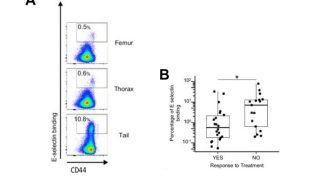
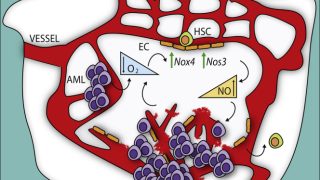
Acute myeloid leukemia (AML) is a hematological malignancy arising from the occurrence of genetic mutations in hematopoietic progenitors, which cause a blockage in the maturation and an uncontrolled growth of leukemic blasts in the bone marrow (BM). The resistance to current therapies and relapse remain a major clinical challenge. For this reason, a novel approach […]

Targeting aberrant DNA methylation in mesenchymal stromal cells as a treatment for myeloma bone disease

Targeting aberrant DNA methylation in mesenchymal stromal cells as a treatment for myeloma bone disease

Biomedicine

By Invited Researcher

Multiple myeloma (MM) is an incurable hematological malignancy characterized by clonal expansion of plasma cells in the bone marrow (BM) . Nearly 90% of myeloma patients suffer from skeletal-related events during the course of the disease that not only affect the quality of life but also their overall survival . Myeloma-associated bone disease (MBD) is […]