Search results: string theory

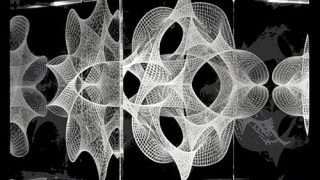
New ways to verify String Theory

New ways to verify String Theory

Physics • Theoretical physics

By Invited Researcher

Author: Marika Taylor, Pro-vice-chancellor, Professor, University of Birmingham In 1980, Stephen Hawking gave his first lecture as Lucasian Professor at the University of Cambridge. The lecture was called “Is the end in sight for theoretical physics?” Hawking, who later became my PhD supervisor, predicted that a theory of everything – uniting the clashing branches of […]

On the spin geometry of String Theory

On the spin geometry of String Theory

Physics • Theoretical physics

By Carlos Shahbazi

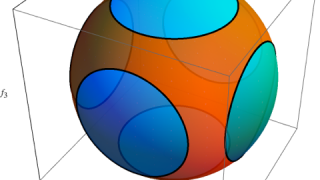
The purpose of this note is to introduce the reader to the notion of Lipschitz structure and its potential applications to the spin geometry required to globally formulate string theory and supergravity on a differentiable manifold. Spinors are a crucial ingredient in the global formulation of string/M-Theory and its low energy limit supergravity, since these […]

The geometry of String Theory compactifications (II): finding the Calabi-Yau manifold

The geometry of String Theory compactifications (II): finding the Calabi-Yau manifold

Physics • Theoretical physics

By Carlos Shahbazi

This is the second of the series of articles on the geometry of String Theory compactifications. Before reading this note, the interested reader may want to read the first note, where the concept of compactification background is introduced in the context of String Theory and M-Theory compactifications. As it is well known, to be well-defined […]

The geometry of String Theory compactifications (I): the basics.

The geometry of String Theory compactifications (I): the basics.

Physics • Theoretical physics

By Carlos Shahbazi

This is first of a series of notes on the geometry of String Theory compactifications. The space-time in String Theory is often described by means of a mathematical object called manifold . Manifolds are very important objects from the mathematical and the physics point of view, not only in String Theory. For example, differential geometry […]

The geometry of String Compactifications (III): exploring the Calabi-Yau manifold

The geometry of String Compactifications (III): exploring the Calabi-Yau manifold

Physics • Theoretical physics

By Carlos Shahbazi

In the previous articles (I, II), we have characterized the simplest class of supersymmetric heterotic compactification backgrounds. In particular, we have finished the second article with the following result: There is a class of admissible Heterotic internal manifolds characterized as being six-dimensional, oriented, spin, Riemannian compact manifolds admitting a parallel spinor respect to the Levi-Civita […]

Solid state physics could teach us how to quantize gravity: Horava’s theory

Solid state physics could teach us how to quantize gravity: Horava’s theory

Cosmology • Physics • Quantum physics

By Mario Herrero-Valea

One of hottest topics in theoretical physics today is, of course, quantum gravity. The fact that, almost a hundred years after the born of the quantum theory, we still not have a functional theory that describes gravity at a microscopic level has become one of the most attractive problems for the majority of physicists (even […]

What kills Schrödinger’s cat?

What kills Schrödinger’s cat?

Quantum physics

By Mapping Ignorance

Somewhere between the microscopic realm of elementary particles and the macroscopic world of human beings, something strange happens: The rules of quantum physics, which work so exquisitely for tiny atoms, seem to lose their grip as objects grow larger. Pondering where and how this shift from small-scale quantum fuzziness to everyday sharp certainty happens gives […]

Numerical relativity and the biggest questions about the Universe

Numerical relativity and the biggest questions about the Universe

Astrophysics • Cosmology

By Mapping Ignorance

We’re often told it is “unscientific” or “meaningless” to ask what happened before the Big Bang. But a new paper by cosmologist Eugene Lim, of King’s College London, UK, and astrophysicists Katy Clough, of Queen Mary University of London, UK, and Josu Aurrekoetxea, at Oxford University, UK, proposes a way forward: using complex computer simulations […]