Search results: archaeological

MI weekly selection #595

MI weekly selection #595

Weekly Selection

By César Tomé

Geographic split of humans linked to emerging language A genomic analysis suggests that human language ability was present at least 135,000 years ago, coinciding with the first geographic split of Homo sapiens. The research suggests that humans developed the cognitive capacity for complex language before it entered social use. This capacity for symbolic thinking and […]

Western Europe’s oldest human face discovered in Spain

Western Europe’s oldest human face discovered in Spain

Anthropology • Evolution

By Invited Researcher

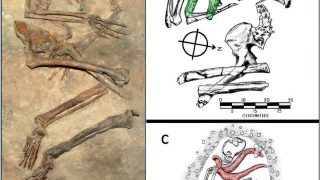
Author: María Martinón-Torres, CENIEH Director, Atapuerca Research Team and author of “Homo imperfectus” (Ed. Destino), Centro Nacional de Investigación sobre la Evolución Humana (CENIEH) The research team at the Atapuerca archaeological sites in Burgos, Spain, has just broken its own record by discovering, for the third time, the oldest human in Western Europe. The team […]

‘Paleo’ diet narrative challenged

‘Paleo’ diet narrative challenged

Anthropology

By Mapping Ignorance

A new archaeological study , conducted along the Jordan River banks south of northern Israel’s Hula Valley, offers a fresh perspective on the dietary habits of early humans, challenging conventional wisdom about prehistoric diets. The research reveals that ancient hunter-gatherers relied heavily on plant foods, particularly starchy plants, as a major energy source. The findings […]

Multiple Denisovan interbreeding events with modern humans

Multiple Denisovan interbreeding events with modern humans

Anthropology • Evolution • Genetics

By Mapping Ignorance

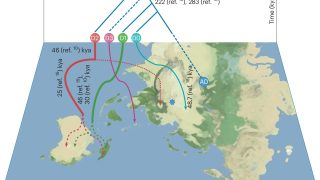
Scientists believe individuals of the most recently discovered hominin group (the Denisovans) that interbred with modern day humans passed on some of their genes via multiple, distinct interbreeding events that helped shape early human history. In 2010, the first draft of the Neanderthal genome was published, and comparisons with modern human genomes revealed that Neanderthal […]

MI weekly selection #577

MI weekly selection #577

Weekly Selection

By César Tomé

Tardigrade genetics offer clues to radiation protection Researchers have identified a new species of tardigrade, Hypsibius henanensis, which offers insights into the mechanisms behind these creatures’ resistance to radiation. The study reveals that certain genes become highly active when exposed to radiation, aiding in DNA repair and protection, a discovery which could have applications in […]

Assessing the quality of citizen science in archaeology

Assessing the quality of citizen science in archaeology

Archaeology

By Mapping Ignorance

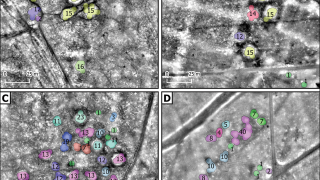
More than 6,500 volunteers have supported the accurate identification of approximately 1,000 prehistoric burial mounds in the Netherlands in just four months, proving the value of involving volunteers in archaeology. In 2018, the Heritage Quest project was launched to harness the power of citizen scientists, utilizing crowd-sourcing to identify archaeological features on lidar imagery of […]

MI weekly selection #571

MI weekly selection #571

Weekly Selection

By César Tomé

New dinosaur species’ traits hint at ceratopsian migration Scientists have identified a previously unknown dinosaur species, Sasayamagnomus saegusai, that weighed about 10 kilograms and reached about 0.8 meters in length, based on fossil remains from southwestern Japan. The primitive member of the herbivorous ceratopsian group lacks the frills and horns of triceratops and other later […]

The final stage in the formation of a ‘European genome’

The final stage in the formation of a ‘European genome’

Anthropology • Genetics

By Invited Researcher

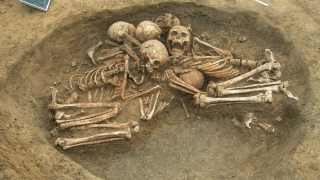
Authors: Eva-Maria Geigl, Directrice de recherche CNRS, co-responsable de l’équipe Épigénome et paléogénome de l’Institut Jacques Monod, Université Paris Cité; Oğuzhan Parasayan, Chercheur post-doctoral, Institut Pasteur, and Thierry Grange, Directeur de Recherche CNRS, co-responsable d’équipe de recherche, Institut Jacques Monod, Université Paris Cité High-resolution analysis of the genomes of individuals buried in a 4,500-year-old collective […]