Search results: epigenetic

Stopping jumping genes could increase lifespan, at least in worms

Stopping jumping genes could increase lifespan, at least in worms

Genetics

By Rosa García-Verdugo

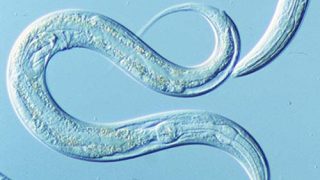
Roundworms are the most commonly used animal model to investigate aging and methods to increase the lifespan such as intermittent fasting. Latest research indicates that jumping genes could be another target for interventions aiming towards expanding the lifespan. What are jumping genes? Also called transposons, are movable stretches of DNA of possible viral origin that […]

Transformer

Transformer

Biology • Physiology

By Juan Ignacio Pérez Iglesias

Inside the cells of breathing organisms –microorganisms, fungi, plants and animals– a cyclically configured sequence of chemical reactions transfers the energy provided by the organic substances –based on carbon chains– incorporated in the food into ATP molecules. This process, which we call the Krebs cycle, starts with acetyl coenzyme A (or acetyl-CoA), a derivative of […]

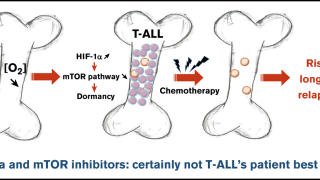
Inhibition of Hypoxia-Inducible Factor Alpha (HIF-1α) helps suppress T-ALL drug resistance

Inhibition of Hypoxia-Inducible Factor Alpha (HIF-1α) helps suppress T-ALL drug resistance

Biomedicine

By Invited Researcher

Hypoxia Author: Marta Irigoyen is a postdoctoral researcher at CIC bioGUNE Despite the fact that c ancer treatments have greatly improved during recent years, chemoresistance remains a major problem in eradicating cancer cells. Drug resistance involves not only many cell intrinsic mechanisms but also extrinsic induced chemoprotection by the tumor microenvironment . In fact, this […]

Nature, nurture and randomness

Nature, nurture and randomness

Biology

By Invited Researcher

More than genes and upbringing determine animal personalities: There’s a good dose of chance in the mix, too. In the age-old debate about nature versus nurture — whether our characteristics are forged by our genes or our upbringing — I have an answer for you. It is both. And it is neither. I’m a behavioral […]

Repurposing ponatinib for ALT-specific minority types of recurrent tumors

Repurposing ponatinib for ALT-specific minority types of recurrent tumors

Biomedicine • Pharmacy

By Invited Researcher

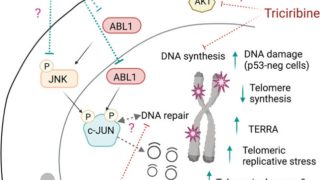
Author: José R. Pineda got his Ph.D. from University of Barcelona in 2006. Since 2007 he has worked for Institut Curie and The French Alternative Energies and Atomic Energy Commission. Currently he is a researcher of the UPV/EHU. He investigates the role of stem cells in physiologic and pathologic conditions. Replicative senescence is a process […]

Mutations in the non-coding genome contribute to autism

Mutations in the non-coding genome contribute to autism

Genetics • Neurobiology

By José Ramón Alonso

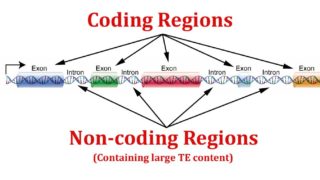
A significant portion of an organism’s genome is non-coding; that is, it does not carry information to make proteins. Part of the non-coding DNA is transcribed into functional non-coding RNA molecules (e.g., transfer RNA, ribosomal RNA and regulatory RNA). Other functions of non-coding DNA include transcriptional and translational regulation of protein coding sequences, nuclear scaffold […]

Dr. Jekyll and Mr. Hyde: what changes in a stem cell to become malignant?

Dr. Jekyll and Mr. Hyde: what changes in a stem cell to become malignant?

Biomedicine

By Invited Researcher

Author: José R. Pineda got his Ph.D. from University of Barcelona in 2006. Since 2007 he has worked for Institut Curie and The French Alternative Energies and Atomic Energy Commission. Currently he is a researcher of the UPV/EHU. He investigates the role of stem cells in physiologic and pathologic conditions. Research in oncology advances very […]