Search results: glacier

MI weekly selection #567

MI weekly selection #567

Weekly Selection

By César Tomé

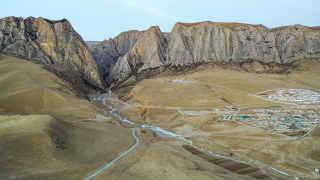
Denisovans, humans may have shared Tibetan Plateau A 40,000-year-old rib bone from a cave on the Tibetan Plateau adds to limited fossil evidence of Denisovans and suggests modern humans coexisted with these close cousins in the region at the time. The fossil is the youngest Denisovan bone found to date, and researchers say modern Tibetans […]
MI weekly selection #549

MI weekly selection #549

Weekly Selection

By César Tomé

Why did humans evolve without tails? Though humans’ ape ancestors have tails, we evolved without them due to a single gene mutation, which was pinpointed through researching the genomes of six ape species and 15 monkey species. Scientists are unsure whether becoming tailless was an evolutionary benefit or a chance mutation, but one theory is […]

MI weekly selection #529

MI weekly selection #529

Weekly Selection

By César Tomé

Moons crashing together may have created Saturn’s rings Saturn’s iconic rings may be the result of a collision between two moons made of ice and rocks. Scientists simulated almost 200 collision scenarios and found that the impact of two moons roughly the size of Saturn’s current moons could disperse into icy rings, consistent with the […]

MI weekly selection #522

MI weekly selection #522

Weekly Selection

By César Tomé

Annulated sea snakes do have genes to see colour Annulated sea snakes, a venomous species found in the oceans of Australia and Asia, can see colour, debunking assumptions of colorblindness after surviving the last 110 million years in the ocean. Researchers used genome sequencing to find four intact copies of the opsin gene SWS1 &#8212 […]

Groundwater pumping alters Earth’s spin

Groundwater pumping alters Earth’s spin

Geosciences

By César Tomé

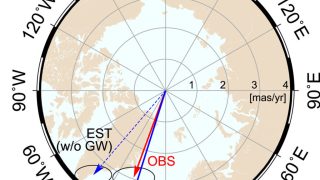
According to a recent study , humans have displaced a significant volume of water from the ground and relocated it, resulting in an Earth shift of approximately 80 centimetres (31.5 inches) eastward solely between 1993 and 2010. According to prior climate models, researchers had initially estimated that humans extracted around 2,150 gigatons of groundwater between […]

MI weekly selection #506

MI weekly selection #506

Weekly Selection

By César Tomé

Rising seas, oxygen depletion led to mass extinction Rising seas likely contributed to high hydrogen sulfide levels and oxygen depletion that killed marine life during Earth’s Devonian period over 350 million years ago. Researchers analyzed black shale samples from the Bakken Formation underlying parts of North Dakota and Canada, finding that waters were drained of […]

MI weekly selection #496

MI weekly selection #496

Weekly Selection

By César Tomé

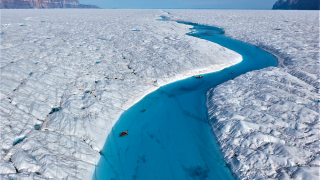
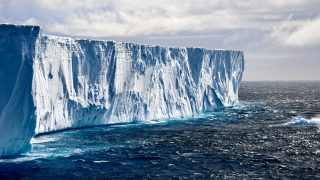
Over two-thirds of world’s glaciers will melt by 2100 More than two-thirds of the world’s glaciers will disappear by 2100 if the climate continues to warm at current trends. The global temperature is on track to rise 2.7 degrees Celsius over pre-industrial levels by the end of the century, but scientists note that if future […]