Search results: marta irigoyen

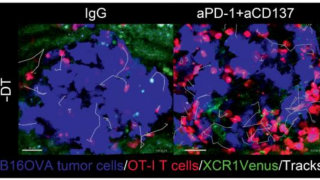
Depletion of dendritic cells in established tumors suppresses immunotherapy efficacy

Depletion of dendritic cells in established tumors suppresses immunotherapy efficacy

Biomedicine

By Invited Researcher

The ability to uptake cellular debris and process the engulfed antigens for MHC class I presentation is mainly performed by a minority subset of dendritic cells . Immunologists identified them as “conventional-type 1 dendritic cells”, and characterized them identifying the presence of surface coexpression of CD11c, XCR1, and DNGR-1 molecules . In mice, two subsets […]
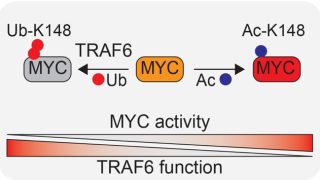
TRAF6 functions as a tumor suppressor in myeloid malignancies

TRAF6 functions as a tumor suppressor in myeloid malignancies

Biomedicine

By Invited Researcher

Hematopoietic stem cells (HSC) accumulate somatic mutations during ageing in healthy individuals . Despite most of these mutations are inconsequential, some HSC can acquire specific mutations providing a competitive advantage leading to a process known as “clonal hematopoiesis of indeterminant potential” (CHIP) . The most common CHIP mutations affects to DNMT3A and TET2 genes and […]

Adipocytes orchestrate T-cell acute lymphoblastic leukemia propagation

Adipocytes orchestrate T-cell acute lymphoblastic leukemia propagation

Biomedicine

By Invited Researcher

T-cell acute lymphoblastic leukemia (T-ALL) is a devastating disease of T-cell progenitors that mainly affects children and young adults. Numerous genomic alterations are known to induce survival, proliferation, and differentiation of T-ALL cells . The interactions between leukemic cells and their microenvironment are known factors that contribute to T-ALL pathogenesis. The bone marrow (BM) microenvironment […]

CASZ1 promotes T-cell acute lymphoblastic leukemia

CASZ1 promotes T-cell acute lymphoblastic leukemia

Biomedicine

By Invited Researcher

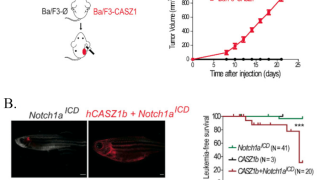
T-cell acute lymphoblastic leukemia (T-ALL) is an aggressive hematological malignancy that results from transformation and clonal expansion of developmentally-arrested T-cell progenitors . Conventional risk-adjusted multi-agent chemotherapy allows for high 5-year event-free survival rates in children. However, a significant number of patients still relapse or do not respond to therapy. Consequently, there have been considerable efforts […]

TREM2 acts as a receptor for IL-34 to suppress acute myeloid leukemia in mice

TREM2 acts as a receptor for IL-34 to suppress acute myeloid leukemia in mice

Biomedicine

By Invited Researcher

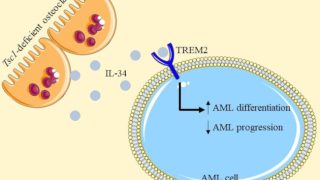
Acute myeloid leukemia (AML) is a stem cell disease caused by the massive mobilization and differentiation arrest in primordial granulocytes. AML is characterized by a low survival rate and high recurrence . Although differentiation-induction therapy represents an innovative treatment strategy for AML , many problems still exist, including irreversible resistance, toxic effects, and limitations of […]

Remodeling of the immune microenvironment in B-ALL leukemia

Remodeling of the immune microenvironment in B-ALL leukemia

Biomedicine

By Invited Researcher

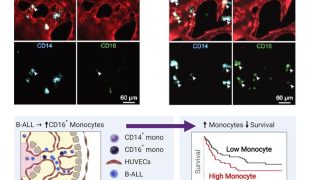
Acute B-cell progenitor acute lymphoblastic leukemia (B-ALL) is a clonal hematopoietic neoplasm characterized by the proliferation and accumulation of B-lymphoid progenitor cells throughout the bone marrow. Although important studies have characterized the underlying biological pathways that underpin therapy failure , resistance and subsequent relapse remain a leading cause of cancer-related deaths . One approach to […]

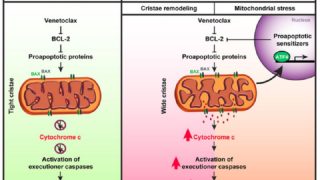
Targeting mitochondrial structure sensitizes acute myeloid leukemia to Venetoclax treatment

Targeting mitochondrial structure sensitizes acute myeloid leukemia to Venetoclax treatment

Biomedicine

By Invited Researcher

Acute Myeloid Leukemia (AML) is a hematopoietic neoplasm characterized by the proliferation and accumulation of aberrant immature myeloid progenitor cells. AML is associated with poor clinical outcome and high mortality, with an overall five-year survival rate of less than 15-30%. For AML patients, standard therapies often fail to achieve the complete remission, disease relapse is […]

Antibody-drug conjugates for the treatment of acute myeloid leukemia

Antibody-drug conjugates for the treatment of acute myeloid leukemia

Biomedicine

By Invited Researcher

Acute myeloid leukemia (AML) is the most common acute leukemia in adults and a common pediatric cancer. Most often, AML develops from cells that would turn into white blood cells. AML is divided into different subtypes based on the cell type and maturation stage. Currently, monocytic AML, including acute myelomonocytic leukemia (M4) and acute monocytic […]

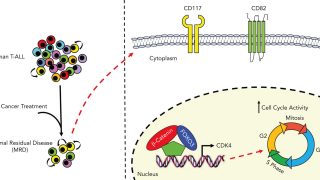
Noncanonical β-catenin interactions promote leukemia-initiating activity in early T-ALL

Noncanonical β-catenin interactions promote leukemia-initiating activity in early T-ALL

Biomedicine

By Invited Researcher

T-cell acute lymphoblastic leukemia (T-ALL) is a hematological malignancy that affects both children and adults. Although with current chemotherapy regimens cure is achieved in ~80% of pediatric patients, adults fare more poorly with only 40% 5-year overall survival . Restricted cellular subsets with asymmetrically enriched leukemia-initiating cell (LIC) activity have been reported in human and […]