Search results: single-cell

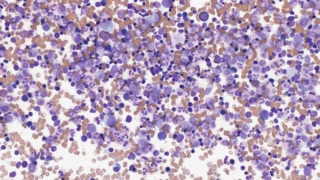
Dr. Jekyll and Mr. Hyde: what changes in a stem cell to become malignant?

Dr. Jekyll and Mr. Hyde: what changes in a stem cell to become malignant?

Biomedicine

By Invited Researcher

Author: José R. Pineda got his Ph.D. from University of Barcelona in 2006. Since 2007 he has worked for Institut Curie and The French Alternative Energies and Atomic Energy Commission. Currently he is a researcher of the UPV/EHU. He investigates the role of stem cells in physiologic and pathologic conditions. Research in oncology advances very […]

An ocean like no other: the Southern Ocean’s ecological richness and significance for global climate

An ocean like no other: the Southern Ocean’s ecological richness and significance for global climate

Biology • Geosciences

By Invited Researcher

Authors: Ceridwen Fraser, Associate professor, University of Otago; Christina Hulbe, Professor and Dean of the School of Surveying (glaciology specialisation), University of Otago; Craig Stevens, Associate Professor in Ocean Physics, National Institute of Water and Atmospheric Research, and Huw Griffiths, Marine Biogeographer, British Antarctic Survey In 2018, a map named after an oceanographer went viral […]

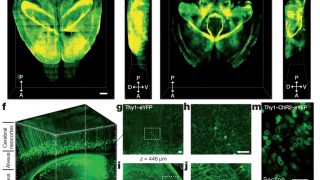
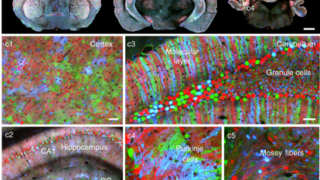
Chromatic multiphoton serial microscopy can generate brain-wide atlas-like colour datasets with subcellular resolution

Chromatic multiphoton serial microscopy can generate brain-wide atlas-like colour datasets with subcellular resolution

Biology • Biomedicine • Computer science • Nanotechnology • Neuroscience • Physics

By DIPC

In 1873, the microscopist Ernst Abbe stipulated a physical limit for the maximum resolution of traditional optical microscopy: 0.2 micrometers, or 200 nanometers (the shortest wavelength for visible light, the extreme limit of violet). This meant that scientists could distinguish whole cells, as well as some parts of the cell called organelles. However, they would […]

MI weekly selection #283

MI weekly selection #283

Weekly Selection

By César Tomé

Climate change disrupting lives of Europe’s bats The changing climate in Europe is affecting bats, disrupting their hibernation and hurting their ability to feed their offspring, which are being born sooner, according to researchers. BBC Studies describe “global road map of development” Using single-cell sequencing, researchers have mapped out the growth of individual cells in […]

MI weekly selection #202

MI weekly selection #202

Humanities & Social Sciences • Science • Technology • Weekly Selection

By César Tomé

Single-celled amoeba uses molecular mechanisms similar to complex life The single-celled amoeba Capsaspora owczarzaki has the same molecular tools as more complex organisms to help it move through various life stages. The findings suggest multi-celled mechanisms may have been in place long before animals evolved. Science News New questions raised about Lyme disease following discovery […]

MI weekly selection #128

MI weekly selection #128

Humanities & Social Sciences • Science • Technology • Weekly Selection

By César Tomé

Graphene, carbon nanotubes help spiders spin stronger webs Several spiders sprayed with mixtures of water and either graphene particles or carbon nanotubes went on to weave markedly stronger webs, according to researchers at the University of Trento in Italy. The scientists found that webs made by spiders sprayed with the nanotubes produced the strongest silk […]

MI weekly selection #123

MI weekly selection #123

Humanities & Social Sciences • Science • Technology • Weekly Selection

By César Tomé

Young galaxy clusters discovered More than 200 young galaxy clusters have been documented by astronomers using data gathered by the Planck and Herschel space telescopes. The researchers have released photos of the clusters, which will be studied further in the hope answers can be found to many cosmic questions like how galaxies grow and the […]

The Naked Brain

The Naked Brain

Materials • Neuroscience

By Sergio Laínez

The human brain is arguably the most fascinating organ found in nature. Its complexity has been known since Santiago Ramón y Cajal pioneering work showed the central nervous system (CNS) was a contiguous neuronal network where neuron is the basic unit as opposed to the view of the brain being a single continuous network (reticulum) […]

MI weekly selection #75

MI weekly selection #75

Humanities & Social Sciences • Science • Technology • Weekly Selection

By César Tomé

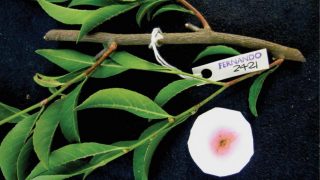
Plant that consumes nickel found in the Philippines A plant that thrives in nickel-rich dirt has been discovered in the Philippines. Rinorea niccolifera can absorb large amounts of nickel through its leaves. UPI Regrown bone in monkeys using pluripotent stem cells It could be possible to grow new bone in humans using induced pluripotent stem […]