Author archives: Invited Researcher

Image of Invited Researcher

Outstanding researchers present their work and share their opinions in Mapping Ignorance.

Turning cheese whey into value: a sustainable substrate for probiotic biomass production

Turning cheese whey into value: a sustainable substrate for probiotic biomass production

Biotechnology • Chemical engineering • Food processing • Microbiology

By Invited Researcher

Probiotics are part of a rapidly expanding field of research. They are live microorganisms that, when administered in adequate amounts, may confer health benefits[1]. Among the most extensively studied probiotics, some species of Lactobacillus and Bifidobacterium have been associated with the maintenance of gut microbiota balance and with several physiological functions[2]. Producing these microorganisms usually […]


The ‘WarGames’ problem: AI agents don’t go rogue

The ‘WarGames’ problem: AI agents don’t go rogue

Artificial Intelligence • Philosophy of science

By Invited Researcher

Author: Deven Desai, Professor of Business Law and Ethics; Associate Director for Law, Policy, and Ethics at the Machine Learning Center, Georgia Institute of Technology AI agents don’t go rogue. That’s something only humans do. Nevertheless, a New York Times article – representative of much news coverage of AI – described an OpenAI hacking as […]

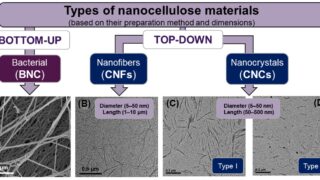
Nanocellulose: from the most abundant biopolymer to next-generation sustainable materials

Nanocellulose: from the most abundant biopolymer to next-generation sustainable materials

Materials

By Invited Researcher

26 April 2026 will always be remembered as the day an apparently impossible barrier was finally broken. At the London Marathon, Kenya’s Sabastian Sawe and Ethiopia’s Yomif Kejelcha became the first men to officially run the 42.195 km distance in under two hours, finishing in 1:59:30 and 1:59:41 respectively. Reaching this landmark was not the […]

My brain runs on 20 watts. Take that, AI !

My brain runs on 20 watts. Take that, AI !

Artificial Intelligence • Computer science • Energy

By Invited Researcher

Author: Aysha Asif Riaz, Research Fellow in Roadmapping Neuromorphic Computing Hardware, Department of Electronic and Electrical Engineering, UCL Right now, your brain is recognising the shapes of these letters, analysing their meaning, and holding a stream of thought together – all on about 20 watts of power. That’s roughly what it takes to run a […]

Epigenetic reactivation of a tumor suppressor program in AML

Epigenetic reactivation of a tumor suppressor program in AML

Biomedicine

By Invited Researcher

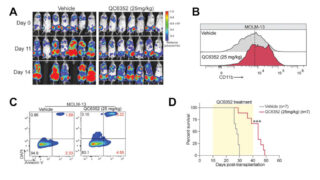
Inactivation of tumor suppressor genes (TSGs) confers a cellular fitness advantage to human cancer cells, including in acute myeloid leukemia (AML), where it disrupts myeloid differentiation and promotes leukemogenesis. Loss-of-function mutations in TSGs are frequently observed in patients with hematologic malignancies , driving disease progression by blocking differentiation and enhancing self-renewal. Therefore, restoration of tumor […]

Bees view the world in surprisingly different ways

Bees view the world in surprisingly different ways

Biology • Neurobiology • Neuroscience

By Invited Researcher

Authors: Elisa Rigosi, Researcher in Sensory Biology, Department of Biology, Lund University and David O’Carroll, Professor of Sensory Biology, Department of Biology, Lund University One bee has long been regarded as a benchmark for visual performance: the honeybee drone. These male honeybees (Apis mellifera) have evolved highly specialised eyes for detecting queens during mating flights […]

Eating a handful of nuts each day is linked with lower risk of high blood pressure

Eating a handful of nuts each day is linked with lower risk of high blood pressure

Health

By Invited Researcher

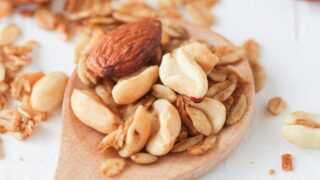
Author: Shireen Kassam, Visiting Professor, Health and Wellbeing Research Group, University of Winchester and Dagfinn Aune, Research Fellow, School of Public Health, Imperial College London More than 1.4 billion people worldwide live with high blood pressure (hypertension). It’s the single biggest metabolic risk factor for early death – driving diseases such as heart attacks, strokes […]