Category archives: Humanities & Social Sciences

On the threefold birth of the scientific method (1): Francis Bacon

On the threefold birth of the scientific method (1): Francis Bacon

Philosophy of science

By Jesús Zamora Bonilla

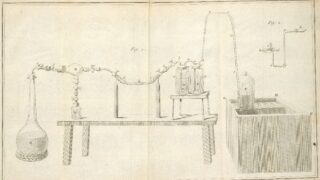
Although science was not born in the seventeenth century (since the need for reliable information about the environment is intrinsic to any human society, and disciplines such as mathematics, astronomy, or biology had already flourished splendidly in Classical Antiquity), we cannot deny that around the year 1600 the history of humanity crossed a decisive threshold […]

Who was Amelia Frank? The life of a forgotten physicist

Who was Amelia Frank? The life of a forgotten physicist

HistoryQuantum physics

By Invited Researcher

Authors: Peter Jacobson, Senior Lecturer in Condensed Matter Physics, The University of Queensland and Beck Wise, Lecturer in Professional Writing, The University of Queensland In 1977, an American physicist named John H. Van Vleck won the Nobel prize for his work on magnetism. In his Nobel lecture, amid a discussion of rare earth elements, one […]

AI tools are being used to subject women in public life to online violence

AI tools are being used to subject women in public life to online violence

Artificial IntelligenceSociology

By Invited Researcher

Authors: Julie Posetti, Director of the Information Integrity Initiative, a project of TheNerve/Professor of Journalism, Chair of the Centre for Journalism and Democracy, City St George’s, University of London; Kaylee Williams, PhD Candidate, Journalism and Online Harm, Columbia University, and Lea Hellmueller, Associate Professor and Associate Dean of Research, City St George’s, University of London […]

Critical thinking for the unstoppable use of artificial intelligence

Critical thinking for the unstoppable use of artificial intelligence

Artificial IntelligenceSociology

By Invited Researcher

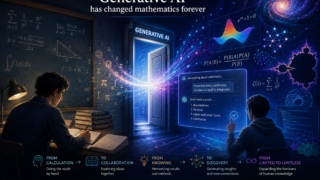
The expansion of generative artificial intelligence (GenAI) such as that offered by ChatGPT has multiplied the amount of content available very easily and quickly. In this scenario, two skills become decisive for safe and effective use: critical thinking—the ability to analyze and evaluate information—and media literacy—knowing how to locate, evaluate, and produce information responsibly. A […]

DNA from sediments could soon reveal who lived in ice age caves

DNA from sediments could soon reveal who lived in ice age caves

AnthropologyArchaeologyEcologyEnvironmentGenetics

By Invited Researcher

Author: Gerlinde Bigga, Scientific Coordinator of the Leibniz Science Campus “Geogenomic Archaeology Campus Tübingen”, University of Tübingen The last two decades have seen a revolution in scientists’ ability to reconstruct the past. This has been made possible through technological advances in the way DNA is extracted from ancient bones and analysed. These advances have revealed […]

A centuries-old grid of holes in the Andes may have been a ‘spreadsheet’ for accounting and exchange

A centuries-old grid of holes in the Andes may have been a ‘spreadsheet’ for accounting and exchange

AnthropologyHistory

By Invited Researcher

Authors: Jacob L. Bongers, Tom Austen Brown Postdoctoral Research Associate, University of Sydney and Charles Stanish, Exec. Director, Institute for the Advanced Study of Culture and the Environment; Professor of Anthropology, University of South Florida In 1931, geologist Robert Shippee and US Navy Lieutenant George R. Johnson led one of the first aerial photography expeditions […]

‘Noah’s Ark’, the USSR’s SETI (search for extraterrestrial life)

‘Noah’s Ark’, the USSR’s SETI (search for extraterrestrial life)

BiologyHistory

By Invited Researcher

Author: Gabriela Radulescu, Guggenheim Postdoctoral Fellow, Smithsonian Institution As humans began to explore outer space in the latter half of the 20th century, radio waves proved a powerful tool. Scientists could send out radio waves to communicate with satellites, rockets and other spacecraft, and use radio telescopes to take in radio waves emitted by objects […]

Does the world exist?  A critique of Markus Gabriel’s metaphysics (1)

Does the world exist? A critique of Markus Gabriel’s metaphysics (1)

Philosophy of science

By Jesús Zamora Bonilla

The main ontological thesis of the German philosopher Markus Gabriel could be summed up in the phrase: “the Whole does not exist, but everything exists.” If we replace “the Whole” with a more familiar word (“the world”), the first part of the thesis amounts to the striking claim that “the world does not exist”—a phrase […]