Bíos, zoé, and the limits of life (& 2)
Bíos, zoé, and the limits of life (& 2)
In our previous entry, I explicated two different concepts that in many languages are subsumed under a single term ‘life’, or equivalent, but that in ancient Greek were separated as two truly distinct things: zoé, or life in the biological sense, and bíos, or life in the biographical sense. I argued that these two things, or properties of a living being, lead to very different ways of ethically evaluating that being and its circumstances, and in particular, that the distinction between bíos and zoé explains our strong intuitions about why there are certain ways of dying, and of being treated after death, that can be considered dignified or undignified.
Before considering the other temporal extremes of human life (i.e., birth or conception), this reference to our intuitions allows me now to point to the fact that we usually make these kinds of moral considerations in a largely pre-reflective way —that is, they are emotional judgments rather than logical conclusions drawn from purely abstract and ‘cold’ philosophical arguments— and that is not a bad thing. After all, even the many ethical evaluations we make in a clearly reflective and dialogically developed manner must ultimately be based on premises or principles that we accept because we feel it would be undignified and aberrant to deny them. In the cases under consideration, our system of moral emotions leads us to intuitively value life in the sense of bíos as ethically more relevant than life in the sense of zoé, even though philosophical and metaethical speculations often push us to accept moral norms that may appear prima facie contrary to those intuitions (for example, when some people claim that intensive livestock farming is a crime exactly as aberrant as the Holocaust, or even more so; cf. 1).
My argument does not seek to assert that we must in every case give priority to our pre-reflective moral emotions over norms developed through abstract philosophical construction; I merely note that there can be a tension between the two, and that it is not set in stone that in every case and without exception the apparently logical conclusions of philosophical argumentation must prevail over our more intuitive and pre-reflective moral emotions.
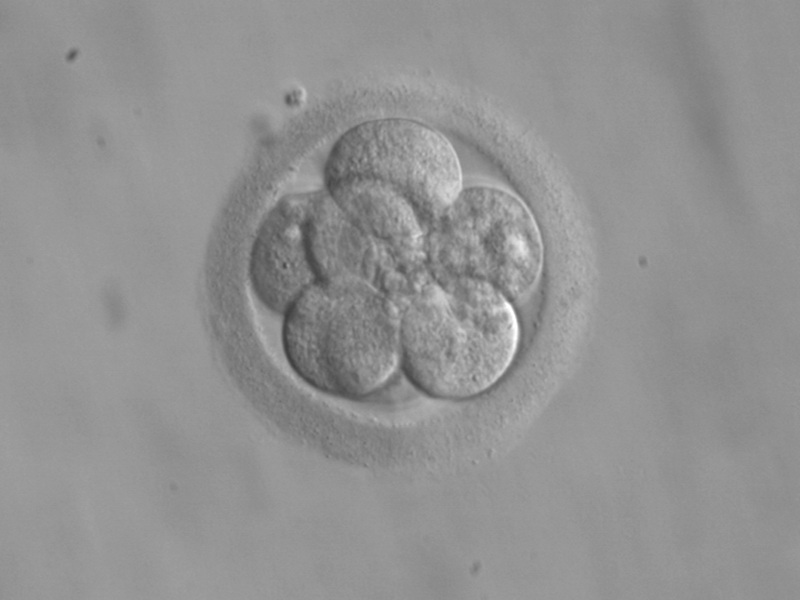
Returning to our topic, I believe that similar reflections can be made with respect to the other end of what we call the “limits of life,” that is, its beginning rather than its end. As I noted above, the fact is that we attribute a much higher value to human life than to animal life because the former is not only “organic life” (and not even only “sentient life”), but “life with meaning,” a “life story,” and this means that, in the system of moral emotions of many people, the magnitude of the “moral harm” involved in ending the life of a human embryo of only a few days or weeks, just as in the case of a patient in the final stages of Alzheimer’s disease, for example, is considerably smaller than that involved in the death of other human beings. It is not that these people (among whom I confess I include myself) consider that this “moral harm” (that is, the death of the embryo or of the incurably ill and suffering patient) is totally irrelevant from a moral point of view, but simply that our negative emotional reaction towards someone who decides to have an abortion, or who decides to end the suffering of a beloved dying person with total dementia, is not severe enough to drive us to categorically prohibit such acts.
After all, the embryo does not yet have a bíos (or, for example, if the abortion is justified by some genetic malformation, it is reasonable to think that the bíos it would have if born would not be minimally dignified), just as we can say that the severely ill Alzheimer’s patient no longer has one, except insofar as it may persist in the memory of their loved ones. What abortion or euthanasia takes away from these beings is only a zoé, something that we feel society has a certain right to allow to be eliminated if doing so produces or promotes some other “good” that we consider sufficiently relevant from a moral point of view (for example, in the case of abortion, avoiding serious inconvenience and psychological suffering for the mother or the child, and in the case of euthanasia, sparing the dying person pain).
I suspect that this emotional reaction is shared even by the vast majority of people who would like these practices to be absolutely prohibited. This is shown, for example, by the fact that —with the exception of a tiny minority among the most fanatical anti-abortion activists— almost no one calls for abortion to be considered, from a criminal-law perspective, a type of murder, but rather, at most, a lesser offense, which would certainly be illogical if we think that in the case of abortion, if the embryo or fetus truly had the status of a full person, the conditions for classifying the act as one of the most serious forms of murder (premeditation, defenselessness of the victim, etc.) would clearly be present. Nor does almost anyone “fight against abortion” in the way they surely would if the government suddenly decided that one out of every ten children under the age of three had to be killed; the usual slogans according to which abortion is a kind of “genocide” or “holocaust” clash head-on with the fact that those who make such claims do not consider it worthwhile to respond in the same way and with the same resolve as, for example, armed civil resistance to the Nazi army did on numerous occasions, which strips those accusations of “genocide” bare and reveals them as a crude rhetorical strategy.
Similarly, at the other end of human life, almost no one objects to people in very advanced stages of Alzheimer’s disease receiving less invasive medical treatment than other patients with better prognoses, whereas if their lives truly had as much value as those of these other patients, it would be completely discriminatory not to devote exactly the same effort and the same resources to them. That is to say, these “defenders of the value of life” find within themselves, at least at the emotional level, that the value they assign to some lives is nowhere near as high as the value they assign to others, even though they allow themselves to be guided by whatever philosophical or religious theory they have adopted to explain to themselves what makes things right or wrong (e.g., the “theory” that “human life is sacred under any circumstances,” or something similar). The fact that this theory fits poorly with many of their own moral emotions does not strike them as a sufficiently serious problem, and of course everyone is free to live with their contradictions.
Naturally, all these reflections leave completely open the question of what the limits should be exactly (that is, the length of pregnancy, or the severity and irreversibility of an illness) before or after which abortion and euthanasia should be considered crimes, and it is reasonable that the social agreements reached on these matters should take into account the very wide diversity of opinions. But I think it is honest to acknowledge that almost all of us emotionally experience an almost total moral indifference when abortion and euthanasia take place as close as possible to the extremes: I do not think that anyone in their right mind would believe that a woman who takes a medication that merely prevents the implantation of a fertilized egg in the uterus, or the doctor and family members who decide to administer to a dying person a dose of painkillers so high that, in addition to relieving pain, it will certainly accelerate their death by a few hours or a few days, should be punished with the same penalties established for the worst cases of murder. The debate over when abortion and euthanasia are justifiable or socially acceptable should always begin with the recognition that this is what almost all of us experience emotionally, and only later allow arguments based on more abstract premises to enter the discussion.
References
- Sztybel, David (2006). “Can the Treatment of Animals Be Compared to the Holocaust?”. Ethics and the Environment. 11 (1): 97–132. doi: 10.1353/een.2006.0007 ↩