International scientific institutions between war and peace. One hundred years of IUPAP (1)
International scientific institutions between war and peace. One hundred years of IUPAP (1)
Author: Jaume Navarro is an Ikerbasque Research Professor at the University of the Basque Country
A few weeks after the invasion of Ukraine by the Russian army, many scientific institutions felt the need to issue public statements against that war. At the time, I was president of the Commission for the History of Physics within the International Union of Pure and Applied Physics (IUPAP) and, as such, I took part in the discussions leading to the final declaration. The timing could not be better for historians of science to make a significant, albeit small, contribution: my commission was working on a project to seriously study the origins and development of IUPAP, which was about to celebrate its centenary. Paying attention to history was important so as to articulate a statement that would avoid past mistakes and incorporate positive experiences of the Union in its one-hundred-year history. Because, like other scientific international unions, IUPAP was born with an idea of peace in mind, yet it had to maneuver through times of war, both hot and cold.
It was after the tragedy of the Great War (1914-1918) that a new wave of internationalism in science took shape. If excessive nationalism had drawn Europe to its worse carnage in history, so the argument went, it was time for international institutions to collaborate in the construction of peace. And scientific research, understood as a cultural enterprise, was one such area in which collaboration rather than competition was to play a key role. In hindsight, one of the ironies of this search for peace was that the losers (Germany, Austria, Hungary, Bulgaria, and what remained of a now highly unstable Ottoman Empire) both collectively and individually, were banned from taking part in the new international order. That meant not only that their national academies could not join the new international unions, but also that individual scientists from those countries were excluded from meetings and collaborations sponsored by the unions. This was particularly poignant in the case of physics.
Indeed, international collaboration had a somewhat long tradition in fields like astronomy or geodesy due to the global scale of some of their research projects. But physics, while the “king of the sciences” in the nineteenth century, had not seen the international cooperation of national academies in the same way. That partly explains why, with the creation of the International Research Council (IRC) by delegates of twelve nations in July 1919, the International Unions of Astronomy (IAU), Geodesy and Geophysics (IUGG) and Pure and Applied Chemistry (IUPAC) immediately approved their initial statutes, soon to be followed by the Mathematical Union (IMU) and the Union for Scientific Radio Telegraphy (URSI); yet, a union of physics would have to wait, both in form and, especially, in practice.
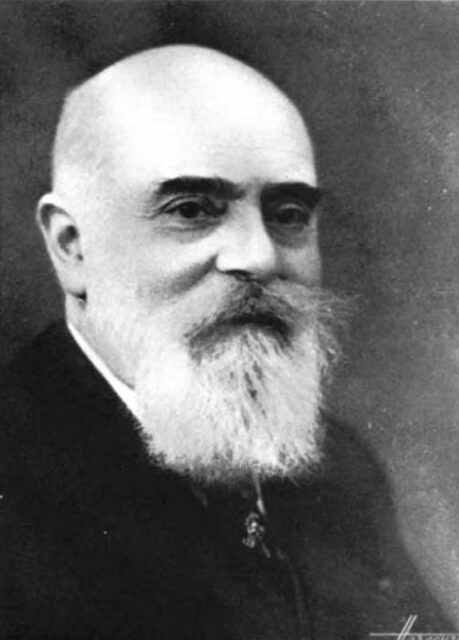
In 1922, a number of physicists from France, Belgium, Britain, the USA and a few other countries met in Paris and came up with a first draft of statutes for an International Union of Physics. It was the young American experimentalist, Robert A. Millikan, who pushed for a name that included both pure and applied physics. The main goals of the Union were the promotion of up-to-date scientific bibliographies, the coordination of fundamental units, and the organization or sponsorship of international conferences. Those present at the meeting to celebrate the fiftieth anniversary of the Société française de physique (SFP) in Paris in December 1923 finally approved the statutes of IUPAP nominating the British and Nobel prize winner William H. Bragg as president, and Henri Abraham, professor of physics at the École Normale Supérieure, as secretary general. But it was informally agreed that the Union would remain basically dormant until it could be fully international; i.e., include German physicists.
By 1924, the vindictive philosophy of the IRC against the Central Powers was being challenged. The Council had grown and now included national academies from up to twenty countries, mostly neutral during the war and who did not see the need for such exclusionary policy. Also, an increasing number of individual scientists were pushing towards a more reconciliatory and inclusive internationalism. French and Belgian representatives were the most reticent to amend the statutes of the IRC and lift the foundational ban. So much so that real changes only came in 1931 when the IRC dissolved and the new International Council of Scientific Unions (ICSU) took its place. From then on, not only was internationalism a real possibility but also each individual scientific union was freer to organize itself as they saw fit.
In the 1920s, however, internationalism in physics materialized in other forms. Two are the best-known and most influential institutions on this aspect: the Solvay Conferences and Niels Bohr’s Institute for theoretical physics in Copenhagen. The former were the initiative of the Belgian industrialist Ernest Solvay to promote relatively small, truly international, by-invitation-only conferences to address pressing issues in both physics and chemistry. After the success of the first two meetings in physics in 1911 and 1913, the third and fourth Solvay meetings in 1921 and 1924 took part in the boycott against the Germans. But, by 1927, the mood had changed and the fifth Solvay conference in Brussels, which eventually became one of the most influential events in shaping the transformation of the early quantum physics into the new quantum mechanics, saw the presence of five German physicists: Max Planck, Albert Einstein, Wolfgang Pauli, Werner Heisenberg and Max Born. In a way, that success was partly due to the tradition that Bohr had managed to create in his institute in Copenhagen. Indeed, Denmark had been a neutral country during the war and the Carlsberg Foundation had generously funded a research center for theoretical physics to keep Bohr in the country. Thanks to both elements, Copenhagen became the central point for physicists and mathematicians to meet and freely exchange ideas on the new quantum physics.
But let us go back to the early history of IUPAP because, while Bohr had played a significant role in bringing together physicists from both sides of the war, he was also partly responsible for the failure of IUPAP to take off. In 1931, Bragg resigned and Millikan was appointed president. His plan was to use his tenure as a springboard for American physicists to become more and more internationally relevant, as well as to materialize the inclusion of the German physical society into IUPAP. He expected to achieve both goals with the organization of a major international physics conference in Chicago in 1933, year in which the wind city was celebrating its centenary. With the presence of a large number of invited physicists IUPAP might finally formalize the German membership.
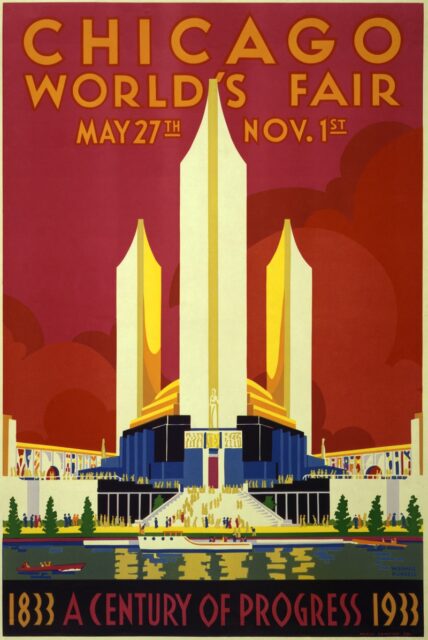
Millikan’s grand plan did not succeed. First, the recession after the crash of 1929 affected the organization of events during the “Century of Progress” celebrations and money to invite scientists from abroad was short. Second, IUPAP and all other unions had one national scientific institution representing the country. But Germany had two such societies, the Deutsche Physikalischer Gesellschaft (DPG) and Gesellschaft für Technische Physik (GTP), and the attempts by Millikan and, especially Abraham, who was still serving as secretary, in correspondence with Planck and other German representatives could not settle the question as to which German society was to represent the country in the Union. And, third, the political climate in Germany was changing and the nazi ideology taking hold of the country was certainly not keen on internationalism.
Chicago did finally organize a minor scientific meeting, but it was far from being the major event Millikan had envisaged to expand and consolidate IUPAP. Promoters of the Union did not, however, give up and decided to use a major physics conference organized by the British Institute of Physics and the Royal Society in both London and Cambridge in October 1934 as the place to formalize German membership. And as a sign to underline the true international character of the Union, they offered the presidency to Bohr as icon of internationalism. The correspondence between Millikan, Abraham, Bohr, Schrödinger and a few other physicists show an amusing yet sad chain of misunderstandings: Abraham and Bohr thought Millikan had accepted the presidency by misreading a telegram of the latter; but Bohr did not want to get involved unless the German membership was fully signed, not simply promised. And that never happened.
So, Millikan having resigned and Bohr having rejected the presidency, the soul of the dormant union was its long-serving secretary, Abraham, who worked hard to find a candidate to act as president while things were clarified. In 1937, the Swedish physicist and Nobel Prize winner Manne Siegbahn agreed to be the president of IUPAP, but the Union was still short of activities, cohesion and a clear goal. It was also the indefatigable Abraham who continued his search for ways to keep the Union alive. He proposed a conference in Copenhagen in 1938, with the support of Bohr, or in Stockholm, organized by Siegbahn or, even as late as late as May 1939 he was thinking of a conference in Paris for 1940. None of them ever materialized and World War II not only destroyed the hopes and dreams of having a fully functional and international Union of Pure and Applied Physics, but even more poignantly, ended with the life of its most ardent defendant: Abraham was murdered in Auschwitz in 1943. As we shall see in the next installment, the Union reinvented itself after the war and had to learn how to navigate the new peace of the Cold War.
Further reading:
Lalli, R. and Navarro, J. (2024). Globalizing Physics: One Hundred Years of the International Union of Pure and Applied Physics. Oxford University Press. [Available in open access: https://academic.oup.com/book/58182]