Your longevity may be tied to your parents, but not directly through DNA
Your longevity may be tied to your parents, but not directly through DNA
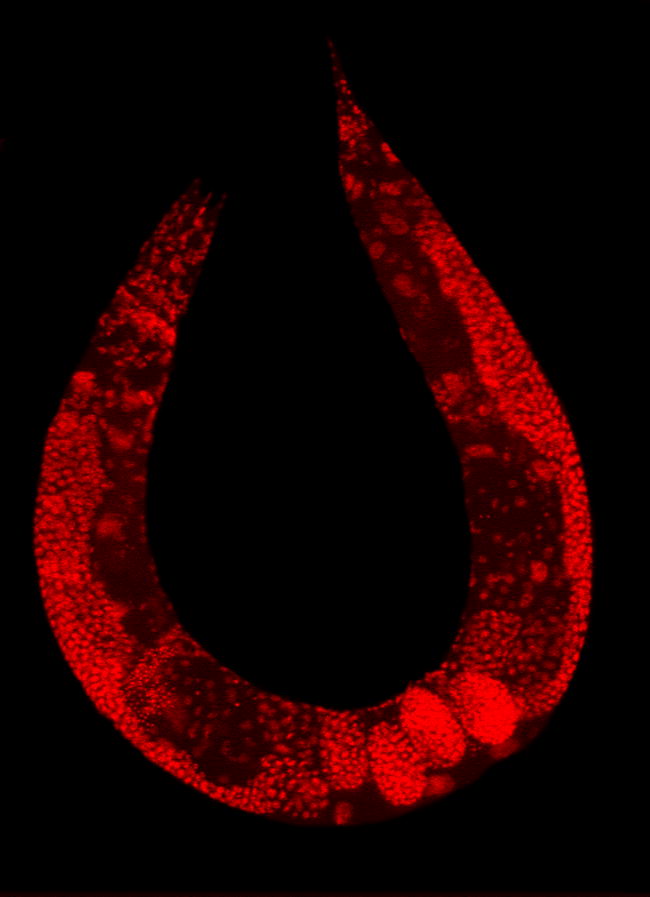
Could your parents’ lifestyle choices affect how long you live? And could this effect not be directly related to your genes? Scientists studying my favourite roundworm (C. elegans) have discovered a surprising answer: yes, they can.
Why does the offspring live longer?
Researchers at HHMI’s Janelia Research Campus made an unexpected discovery 1 while studying aging in worms. When they boosted the activity of a specific enzyme inside cellular structures called lysosomes, the worms lived up to 60% longer than usual. So far, so good. The real surprise came when they observed the offspring.
Even after removing the genetic modification they had introduced by crossing the mutant worms with wild-type worms without the mutation, the descendants continued living longer than normal worms for several generations. This hinted at something beyond DNA being passed down from parents to offspring and influencing longevity.
Because, lysosomes
The response involves lysosomes, tiny subcellular compartments that scientists once thought simply recycled cellular waste. However, this research revealed that lysosomes play a much more important role. When lysosomes changes to promote longevity, induce production of special proteins called histones which regulate gene expression. When these proteins are transferred from body cells to reproductive cells the increased longevity gets passed to the offspring.
The importance of epigenetics
This discovery has broader implications than understanding aging. Epigenetic changes help organisms adapt to environmental challenges such as diet changes, toxins, or stress. This research demonstrates how these adaptations might transfer from parents to children, potentially affecting multiple generations.
The team also found that fasting activates this inheritance pathway, connecting dietary choices to inheritable cellular adjustments. This helps explain how parental nutrition can impact the health of children and grandchildren.
Personally, I find the results of this study another proof of the incredible complexity of life and how everything is interconnected: “cleaning” cell structures, epigenetics, heredity and longevity. Simple, easy answers in biology are hard to find, therefore, we need to be very cautious when drawing 1:1 logical connections such as one gene variant, one disease as in most cases, the reality is much more complicated.
References
- Qinghao Zhang et al.(2025) Lysosomes signal through the epigenome to regulate longevity across generations Science doi::10.1126/science.adn8754 ↩