On the threefold birth of the scientific method (3): Galileo Galilei
On the threefold birth of the scientific method (3): Galileo Galilei
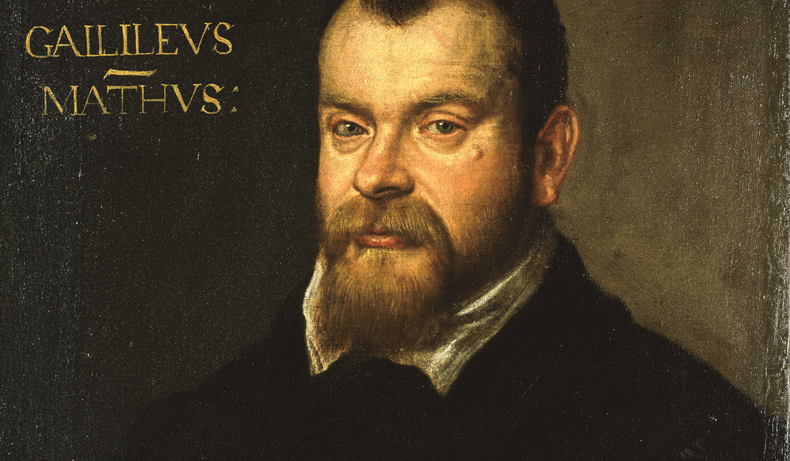
We finish this series with the most influential author of our trio (together with Bacon and Descartes) in shaping the scientific method: the Italian Galileo Galilei, who was also, not coincidentally, the most brilliant and prolific scientist of the three. He shared with Descartes the ambition of reducing the phenomena to be investigated to a mathematical law as simple and evident as possible (“the universe is written in mathematical characters,” he wrote), dismissing sensible qualities (color, texture, sound, etc.) as subjective and superfluous unless they could be measured with precision. But unlike the Frenchman, Galileo was aware that most physical laws could not, in general, be deduced from “first principles,” and that even when it seemed they could be deduced, it was still necessary to carry out very careful—and often very ingenious—observations to verify that such laws were indeed fulfilled in nature. These “ingenious observations” are, of course, experiments, which is why Galileo is regarded as the father of the experimental method.
The most distinctive feature of a Galilean experiment is that it involves constructing an artificial system in which one attempts, first, to ensure that only those causal factors whose consequences we wish to observe influence the objects (that is, a system designed to reproduce the idealized conditions under which the physical law in question is assumed to be valid), and second, to make it possible to easily measure the mathematical relationships that, according to that law, should obtain—that is, the empirical predictions that we had mathematically deduced from that law.
The Inclined Plane Experiment
Galileo’s most famous experiment, described in his book Discourses and Mathematical Demonstrations Relating to Two New Sciences (1638), is the one he designed to empirically test his argument that falling bodies move with uniform acceleration—that is, that their velocity increases proportionally with time (the well-known “Galilean law of free fall”). The main problem in determining whether bodies really fall in this way was, obviously, that very heavy objects fall too quickly for time and velocity to be measured with sufficient accuracy (and especially to measure both quantities at once). Another important problem was that many bodies fall irregularly due to the influence of wind and turbulences, and may even be slowed to some extent by air resistance. Indeed, Galileo’s earliest reflections on the problem had been based, mistakenly, on applying Archimedes’ principle of floating bodies, since falling objects are, after all, “immersed” in air, just as fish are in water.
Galileo’s strategy for testing his law of fall combined two brilliant maneuvers. First, he derived from the more abstract principle of uniformly accelerated motion a somewhat simpler mathematical relationship, in this case between time and distance traveled during the fall: when a body falls according to that law, the distance it travels is proportional to the square of the time during which it falls. That is, if in one second it travels a distance of 1D, in two seconds it will travel a distance of 2²D = 4D, in three seconds a distance of 3²D = 9D, in four seconds a distance of 4²D = 16D, and so on. Second, he constructed an apparatus in which this relationship was relatively easy to observe: an inclined plane along which relatively heavy balls, as close to perfectly spherical as possible, were allowed to roll down a channel polished as smoothly as possible. (Galileo had previously justified that the speed a body reaches when falling depends only on the height from which it falls, and not on whether its trajectory is more or less vertical or inclined.) By slowing the fall in this way, time and distance became much easier to measure with precision.
In the most ingenious version of the experiment (for which, unfortunately, there is no historical evidence that it was actually among the variants Galileo designed), very light little bells are placed along the channel down which the balls roll, so that the balls gently brush against them as they pass, causing them to ring without losing speed. These bells are placed at a series of distances from the upper point that follow exactly the proportion 1–4–9–16–25. When a ball rolls down and the bells ring, we directly perceive that the sounds occur with perfectly regular frequency: ding – ding – ding – ding – ding, so that exactly the same amount of time has elapsed between the passing of each pair of consecutive bells. After all, Galileo, besides being a thinker as formidable as Bacon and Descartes, was also a much better musician than they were.
This detail is not trivial, since it reveals a fundamental aspect of the Galilean experimental method: the connection between mathematical abstraction and carefully organized sensory experience. Galileo did not limit himself to imagining elegant mathematical laws, but rather designed concrete situations in which nature, so to speak, responded clearly to questions formulated in mathematical language. The experiment was not merely a passive observation, but an active intervention, a way of compelling nature to reveal its hidden regularities under controlled conditions. Thus, the inclined plane was not only a practical resource for slowing down the fall, but also a conceptual instrument that made it possible to isolate the essential phenomenon. By reducing the speed of motion, Galileo could measure time more accurately, compare distances, and verify whether the quadratic relationship truly held. The regularity of the sounds of the bells transformed an abstract mathematical law into an immediate audible experience.
Another crucial innovation in Galileo’s contribution to the scientific method was his systematic design and use of artificial instruments of observation, most notably the telescope. Although the telescope had been invented in the Netherlands a few years before, Galileo greatly improved it and, more importantly, was the first to use it as a scientific instrument to produce reliable knowledge about the heavens, which he publicly announced in his 1610 booklet Sidereus nuncius (“The starry messenger”). By doing so, he transformed observation itself into an experimental practice, because the telescope was not a passive aid but an artificial system that extended and controlled the senses under specific, reproducible conditions. With it, he discovered the moons of Jupiter, the phases of Venus, and the irregular surface of the Moon, observations that directly challenged traditional cosmology. This showed that knowledge could be generated by deliberately constructing devices that revealed phenomena inaccessible to unaided perception, reinforcing the experimental principle that nature must be interrogated through carefully designed interventions.
This approach represented a radical transformation in the way of studying the physical world. Instead of relying solely on pure reason or on casual observation, Galileo combined both in a systematic process in which mathematical theory guided the experiment or technologically improved observation, which confirmed or corrected the theory. This balance between mathematical deduction and empirical verification became one of the fundamental pillars of modern science. Thanks to this method, Galileo not only discovered specific laws of motion, but also established a new form of knowledge based on the interaction between mind and experience, between calculation and measurement, between idea and phenomenon. For this reason, his legacy does not consist solely in his particular discoveries, but in having shown how nature must be investigated in order to understand it in an objective, precise, and reliable way.
We cannot finish without mentioning, however, that it was precisely the very same artificiality of the new means of empirical testing Galilei devised, what allowed many critics of the ‘new science’ to deny the necessity to accept the ‘facts’ Galilei and many others thought that were made evident by those observations and experiments: for, after all, why should we believe what is presented to us by means of machines and systems that are not ‘natural’? We, four centuries after Galilei, are so accustomed to the use of those instruments, that it can be difficult for us to understand why the resistance to accept their validity could have been so profound, but it is a good way of reflecting on the artificiality of modern science.
References
Galileo Galilei, 2016, Sidereus nuncius, The University of Chicago Press.
Galileo Galilei, 2023, Two new sciences, Springer.