Author archives: César Tomé

Cyanobacteria could help colonize the moon and Mars

Cyanobacteria could help colonize the moon and Mars

GeosciencesMicrobiology

By César Tomé

The biochemical process by which cyanobacteria acquire nutrients from rocks in Chile’s Atacama Desert has inspired engineers to think of new ways microbes might help humans build colonies on the moon and Mars. Researchers used high-resolution electron microscopy and advanced spectroscopic imaging techniques to gain a precise understanding of how microorganisms modify both naturally occurring […]

MI weekly selection #492

MI weekly selection #492

Weekly Selection

By César Tomé

Radioactive meteorites could have brought life to Earth The gamma rays produced by carbonaceous chondrites, radioactive meteorites that contain water and organic compounds, could have been sufficient to spark the chemical reactions that created amino acids, the building blocks of life on Earth, researchers have concluded. The study is based on observations from bombarding chemicals […]

MI weekly selection #491

MI weekly selection #491

Weekly Selection

By César Tomé

Flash thought to result from black hole swallowing a star Two separate teams of scientists, who have published papers in Nature and Nature Astronomy, have concluded that a flash of light that appeared in February was the astrophysical jet that erupted from a massive black hole as it swallowed a star. “From the data we […]

Ultraprecise entangled clocks

Ultraprecise entangled clocks

Quantum physics

By César Tomé

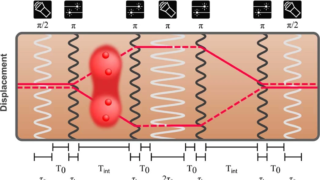
For the first time, scientists have entangled atoms for use as networked quantum sensors, specifically, atomic clocks and accelerometers. The research team’s experimental setup yielded ultraprecise measurements of time and acceleration. Compared to a similar setup that does not draw on quantum entanglement, their time measurements were 3.5 times more precise, and acceleration measurements exhibited […]

MI weekly selection #490

MI weekly selection #490

Weekly Selection

By César Tomé

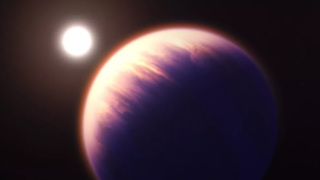
Best-explored planet outside our solar system WASP-39b, a boiling Saturn-like planet 700 light-years away from the sun has become the best-explored planet outside our solar system, as the James Webb Space Telescope’s observations have yielded a trove of information about the exoplanet’s atmosphere. Laura Kreidberg, director of the Max Planck Institute for Astronomy, said the […]

MI weekly selection #489

MI weekly selection #489

Weekly Selection

By César Tomé

Meteorites may have brought water to Earth Analysis of fragments of a meteorite that landed in the driveway of a British home in 2021 revels the space debris originated in the outer solar system and held water chemically similar to the water found on Earth. The meteorite came from an asteroid in Jupiter’s orbit some […]

Neuromorphic electronics into bacterial cells

Neuromorphic electronics into bacterial cells

BiotechnologyComputer science

By César Tomé

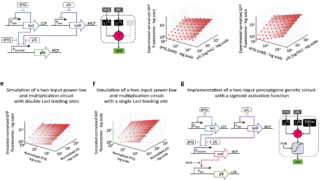
Bringing together concepts from electrical engineering and bioengineering tools, scientists have produced genetic “devices” designed to perform neuromorphic computations like artificial neural circuits in bacterial cells. The genetic material was inserted into bacterial cells in the form of a plasmid: a relatively short DNA molecule that remains separate from the bacteria’s “natural” genome. Plasmids also […]

MI weekly selection #488

MI weekly selection #488

Weekly Selection

By César Tomé

Layered rocks may be Earth’s oldest known fossils Researchers have found fossil evidence of what may be the first known life on Earth with the discovery of stromatolites, layered rocks formed by photosynthetic microbes, in Western Australia’s Dresser Formation that date back 3.48 billion years. Full Story: Live Science Sharks face rising extinction risk, other […]