Category archives: Humanities & Social Sciences

The Grand Bazaar of Wisdom (and 6): Mathematical models in the economics of science

The Grand Bazaar of Wisdom (and 6): Mathematical models in the economics of science

EconomicsPhilosophy of science

By Jesús Zamora Bonilla

The most distinctive feature of modern economics is probably its reliance on the methodology of mathematical model building. The final aim of scientific model building is illuminating real phenomena; furthermore, models are basically logical arguments, whose main virtue is that they allow us to see very clearly what follows, and also what does not follow […]

MI weekly selection #65

MI weekly selection #65

Humanities & Social SciencesScienceTechnologyWeekly Selection

By César Tomé

Lone gene determines wing mimicry in butterflies One gene can determine the wing patterns of female swallowtail butterflies, making them resemble a different, and toxic, butterfly species, according to a study published in Nature. The finding adds to the debate over mimicry and how it helps put off would-be predators. A team of evolutionary biologists […]

MI weekly selection #64

MI weekly selection #64

Humanities & Social SciencesScienceTechnologyWeekly Selection

By César Tomé

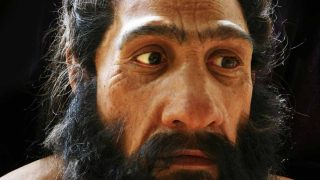
The beringia standstill hypothesis A review of genetic evidence suggests that the Native American founding population lived in Beringia for thousands of years before migrating south into North America. And sediments taken from the Bering Sea show that at the time, the region also had woody plants for building fires, and grassland steppes where woolly […]

The Grand Bazaar of Wisdom (5): Institutionalist theories of the economics of science

The Grand Bazaar of Wisdom (5): Institutionalist theories of the economics of science

EconomicsPhilosophy of science

By Jesús Zamora Bonilla

I will end this survey of the main contributions to the economics of scientific knowledge (ESK) by discussing the works which attempt to offer a more or less systematic conception of the process of scientific discovery; in this entry, I will talk about ‘institutionalist’ theories, i.e., those that abstain from using mathematical models. The first […]

MI weekly selection #63

MI weekly selection #63

Humanities & Social SciencesScienceTechnologyWeekly Selection

By César Tomé

Beluga whales infected with cat parasites Parasites known to infect cats have been discovered in Arctic beluga whales. Toxoplasma gondii can cause people to go blind. Scientists have issued a health advisory for those in the Western Arctic region who eat beluga meat. BBC News Higgs boson bubbles sent shock waves throughout nascent universe Bubbles […]

MI weekly selection #62

MI weekly selection #62

Humanities & Social SciencesScienceTechnologyWeekly Selection

By César Tomé

Mesozoic-era ichthyosaur had live births on land The fossil remains of a 248 million-year-old ichthyosaur have revealed that the Mesozoic-era reptile died while giving birth with two offspring still inside it. Scientists were surprised to note that the birth was occurring on land, which goes against a long-held belief that the sea creatures delivered their […]

MI weekly selection #61

MI weekly selection #61

Humanities & Social SciencesScienceTechnologyWeekly Selection

By César Tomé

Highly conductive graphene nanoribbons Graphene nanoribbons can conduct electricity much better than was expected. The new graphene nanoribbons differ from other forms by having no rough edges allowing electrons to move ten times more swiftly than theory says they should. The results could have implications in the development of high-end electronics. Nature News Advanced bionic […]

The Grand Bazaar of Wisdom (4): From the “free market of ideas” to the “republic of science”

The Grand Bazaar of Wisdom (4): From the “free market of ideas” to the “republic of science”

Philosophy of science

By Jesús Zamora Bonilla

Traditionally, economics is not only about the optimisation of some magnitudes, be they utility, profits, wealth, or social welfare. Beyond the assumption that economic agents are rational beings who always try to make the best possible choice, there is the indisputable fact that the objects of economic research are social phenomena, that have to do […]