How scientists made temperature measurable
How scientists made temperature measurable
Author: José Luis Granados Mateo is a postdoctoral researcher in the Department of Philosophy at the University of the Basque Country (EHU) and a member of the Integrated History and Philosophy of Science (iHPS) research group. His work focuses on history and philosophy of science, science and values, and the epistemology of scientific practices.
A thermometer seems to do something very simple: it turns heat and cold into a number. But that apparent simplicity hides a more awkward question: what had to be stabilised before “how hot” could be given a number?
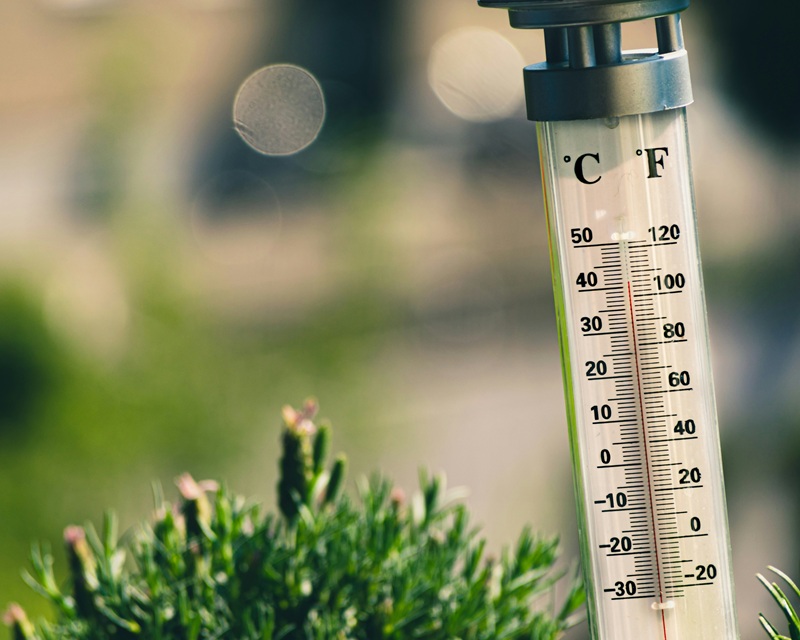
Hasok Chang’s Inventing Temperature: Measurement and Scientific Progress is a history of that hidden work. Temperature is now among the most ordinary quantities in science. We read it from kitchen thermometers, weather apps, ovens, engines and laboratory instruments. Yet Chang shows that this simplicity had to be earned. Before temperature could become a measurable quantity, scientists had to decide what could count as a fixed point, how different instruments could be compared, and how a scale could be extended into regions where familiar thermometers no longer worked. Chang’s point is not simply that early thermometers were inaccurate. It is that measurement itself can be an achievement before it becomes a routine.
There was no obvious procedure waiting to be cleaned up; measuring temperature required scientists to make phenomena stable enough to be used as standards.
The trouble with fixed points
Take the boiling point of water. Today we learn that pure water boils at 100°C under standard atmospheric pressure. It sounds like the sort of fact that nature simply offers to anyone with a thermometer. In the eighteenth century, that simplicity was precisely what had to be secured.
In 1776, the Royal Society appointed a committee to bring some order to thermometry. Even the best thermometers of the period disagreed by several degrees Fahrenheit about where water boiled. Part of the problem was already understood: the boiling point varied with atmospheric pressure. But there were other complications. The manner of boiling itself seemed to matter. Water could bubble gently, boil irregularly or boil violently, and these different states did not always appear to give the same reading.
The fixed point did not disappear, but it became less innocent. If boiling water was to serve as a standard, scientists had to specify the circumstances under which it would do so.
Jean-André De Luc, a Genevan natural philosopher and one of the major eighteenth-century authorities on thermometry, pushed the difficulty further. He showed that water could be heated beyond its ordinary boiling point once dissolved air had been removed. In early trials, the water appeared to begin boiling continuously only when the surrounding oil bath reached temperatures as high as 140°C, though De Luc could not be sure that the water itself had reached that temperature. In a more controlled experiment, after weeks of patiently shaking water to expel the air, the airless water reached 112.2°C under normal atmospheric pressure before boiling explosively.
Chang quotes De Luc’s recollection that the operation lasted four weeks, during which he hardly ever put down the flask. The anecdote makes the labour of stabilising a fixed point tangible: a scientist eating, reading, writing, walking and receiving visitors while continually shaking a vessel of water. The point was serious. De Luc was not using our modern theory of nucleation. He was trying to distinguish what he called “true ebullition” from vapour formed around escaping air bubbles.
The boiling point remained useful, but only once its conditions of use had been specified. As Chang puts it, “if defensible fixed points do not occur naturally, they must be manufactured.”
That word, manufactured, can easily mislead. The point is not that scientists invented the boiling point by convention. They learned how to arrange vessels, fluids, pressures and instruments so that boiling could serve as a stable reference. Strictly speaking, the more reliable standard was not simply the temperature of boiling water but the steam point: the temperature of saturated steam at standard atmospheric pressure. This meant attending to pressure, using suitable vessels, exposing the thermometer to steam rather than plunging it into liquid water, and learning from the very impurities that purification had tried to eliminate. De Luc focused on dissolved air. Later work complicated the picture by showing that dust and other impurities also helped ordinary water avoid the strange behaviour seen in carefully purified vessels.
Fixity, then, did not emerge from nature in a pure state. It emerged from disciplined handling of a materially messy world.
When thermometers disagree
Even after fixed points had been established, another problem remained. Suppose we build two thermometers, one filled with mercury and the other with alcohol, and calibrate both at the freezing and boiling points of water. Between those points, the two instruments need not agree. A point marked as 50°C by one may not coincide with 50°C on the other.
Which one, if either, should define the scale?
The modern answer eventually appeals to theory. In ideal-gas theory, gas behaviour is tied in a simple linear way to absolute temperature, so gas thermometers can be treated as better approximations to thermodynamic temperature. But Chang’s historical question is sharper: how could such a conclusion be justified before the relevant theory and measurements had already been secured? The problem was not merely that different substances expanded differently. It was that choosing the right substance seemed to require the very temperature scale that the substance was supposed to provide. To know that a gas behaves ideally, we seem to need a trustworthy thermometer. To know which thermometer to trust, we seem to need to know which substance expands in the right way.
This is not a small technical inconvenience. The circularity lies close to the heart of measurement.
Henri Victor Regnault, one of the leading French experimentalists of the nineteenth century, did not solve the foundational problem by finding an unquestionable starting point. He made the demand more modest, but also more testable. Instead of trying to prove that one thermometer defined the true scale, he asked whether instruments of the same kind remained comparable with one another under controlled variations —for instance, different kinds of glass in mercury thermometers, or different densities of air in air thermometers.
This criterion proved powerful. Mercury thermometers made with different kinds of glass diverged by more than 5°C at elevated temperatures. Air thermometers filled with air at different densities stayed within about 0.3°C of each other. Regnault had not proved that the air thermometer was ultimately correct. He had shown that it behaved more consistently than its rivals.
The reason was not merely practical. If temperature is to be treated as a measurable physical magnitude, the same situation cannot be allowed to have several incompatible values merely because the instruments differ. Comparability was therefore not a trivial preference for neatness. It was a minimal condition for treating something as a measurable quantity at all.
Even so, Chang is careful not to turn Regnault into a hero who escapes circularity once and for all. There was no final proof. One could always imagine further parameters to vary. At some point, judgement was unavoidable: not arbitrary judgement, but trained judgement about when the convergence was good enough to support further work.
Progress without foundations
Chang calls this kind of process epistemic iteration. Scientific inquiry often begins by accepting an existing body of knowledge, not because it is certain, but because inquiry has to begin from inherited practices. Scientists then use that provisional starting point to refine, extend or correct the very system they first relied on.
The process is conservative and revisionary at the same time. It respects inherited standards, but it does not treat them as sacred.
The freezing point of mercury provides one of Chang’s clearest examples. When Henry Cavendish designed an experiment to determine it, he had to assume that mercury continued to expand regularly down to the point where it froze. That assumption had not been proved. Still, it was not a wild guess. It extended what was already known about mercury at ordinary temperatures.
Later, Claude Pouillet used Thilorier’s paste —a cooling mixture of solid carbon dioxide and ether— to connect several imperfect instruments: an air thermometer, a bismuth–copper thermocouple and alcohol thermometers. The different methods converged around −40°C for the freezing point of mercury. No single instrument provided an absolute foundation. The justification came from the way several fallible standards supported one another.
A similar pattern appears in the history of absolute temperature. William Thomson, later Lord Kelvin, first proposed an absolute scale using Carnot’s theory of heat engines. He later revised the scale in the light of Joule’s work on energy conversion. But an abstract thermodynamic definition still had to be connected with actual procedures. The Joule–Thomson work helped connect the abstract thermodynamic scale with actual gas thermometry, not by removing all assumptions, but by making them explicit enough to be corrected.
This is the form of progress Chang wants us to notice: not a march from darkness into light, and not the discovery of an indubitable foundation, but a self-correcting process in which inherited standards are used without being treated as sacred. Justification, in such cases, comes retrospectively, through the success of the corrections that those standards make possible.
Science by other means
One of the most provocative claims of Inventing Temperature is that history and philosophy of science can sometimes contribute to our knowledge of nature, rather than merely commenting on it. Chang calls this mode of inquiry complementary science.
The idea is not that historians and philosophers should replace laboratory scientists. It is that specialist science, precisely because it is so effective, leaves certain questions behind. Modern research moves forward by taking many things for granted. That is often necessary. But it also means that basic questions can become invisible. Complementary science begins where specialist science has, for practical reasons, stopped asking, not because the question is meaningless, but because it no longer belongs to the current research frontier.
Why do we trust the boiling point of water? How do we know that a thermometer remains meaningful outside the range in which it was calibrated? What happens when a phenomenon once known to experimenters disappears from textbooks and from ordinary scientific memory?
For Chang, these are not merely questions about science. At their best, they are questions about nature pursued through historical and philosophical means.
Superheating is a good example. The possibility that water can remain liquid above its normal boiling point was well understood by some eighteenth- and nineteenth-century investigators. De Luc explored it with extraordinary patience. Yet Chang argues that this knowledge later became marginal, simplified in textbooks, or forgotten. Recovering it is not antiquarianism. It changes what we take ourselves to know about water, boiling and the conditions under which familiar facts remain true.
That is why Inventing Temperature is not just a history of thermometers. It is also a challenge to a familiar picture of scientific knowledge. The facts we teach as elementary often look elementary only because the labour that made them possible has disappeared from view.
Why this matters
The next time a thermometer gives a number, the interesting question is not simply whether the instrument is accurate. It is what had to happen before such a number could mean anything at all.
Chang’s answer is that measurement is not the passive reading of nature’s own scale. It is the art of making the world answer a question reproducibly. To measure temperature, scientists had to make phenomena stable, instruments comparable and concepts robust enough to travel beyond the circumstances in which they first made sense.
It is quieter than the usual tale of discovery, but perhaps more revealing: before science can discover with instruments, it has to learn how those instruments can be made to speak.
References
Chang, H. (2004). Inventing Temperature: Measurement and Scientific Progress. Oxford University Press.
Chang, H. (1999). “History and Philosophy of Science as a Continuation of Science by Other Means”. Science & Education, 8, 413–425.
Kuhn, T. S. (1962). The Structure of Scientific Revolutions. University of Chicago Press.
Neurath, O. (1932/33). “Protocol Statements”. In Philosophical Papers 1913–194, 91–99.
Acknowledgements: This article was written with the support of the Basque Government Postdoctoral Programme for Doctoral Research Staff, 2023–2028.