Category archives: Humanities & Social Sciences

MI weekly selection #152

MI weekly selection #152

Humanities & Social SciencesScienceTechnologyWeekly Selection

By César Tomé

Evidence of plague found in Bronze Age skeletons DNA testing of Bronze Age skeletons has found evidence of a plague outbreak that occurred thousands of years before the Black Death that devastated Europe in the 1300s. Researchers found enough Yersinia pestis DNA in skeletons that tested positive for the bacteria to produce complete genome sequences […]

Did the first Americans come from Bilbao?

Did the first Americans come from Bilbao?

AnthropologyArchaeologyGeneticsHistory

By Jesús Zamora Bonilla

As everybody knows, the people from Bilbao are born wherever they want. And, according to one of the most captivating conjectures in contemporary archaeology, this might have been so in a totally unexpected way even from many millennia ago. The conjecture I am referring to is the ‘Solutrean hypothesis’ about the first human population of […]

MI weekly selection #151

MI weekly selection #151

Humanities & Social SciencesScienceTechnologyWeekly Selection

By César Tomé

Still trying to make sense of New Horizons’ Pluto data Pluto’s frozen mountain ranges Norgay Montes and Hillary Montes are among many of the dwarf planet’s features described in the first published study of data gathered so far from the close flyby of NASA’s New Horizons spacecraft in July. The mission scientists acknowledge they still […]

Do some paranormal beliefs develop from the experience of coincidences?

Do some paranormal beliefs develop from the experience of coincidences?

Psychology

By Invited Researcher

Why some people believe in ghosts, haunted houses, or telepathy, while others remain skeptical? This question has been present in the scientific literature for decades and still remains unanswered. Research has discarded several candidate causes for this difference, such as deficits in intelligence or lack of reasoning skills . According to our current scientific knowledge […]

Evidence-based trials: better compared than randomized

Evidence-based trials: better compared than randomized

Philosophy of science

By Jon Gurutz Izquierdo

For quite a while now, it has been assumed that Randomized Controlled Trials (RCTs) have improved the way we acquire knowledge, especially in the scientific area where this technique is the gold standard, clinical practice. From Medicine to Social sciences, evidence-based policies have turned into the widespread common ground from where to seek trustworthy information […]

Skepticism, a short uncertain history (6): The mother of all lost causes

Skepticism, a short uncertain history (6): The mother of all lost causes

EpistemologyPhilosophy of science

By Jesús Zamora Bonilla

Descartes’ opening of the Pandora’s box of skepticism, and the liberation of the Evil Demon it triggered, started a terrible shock in the tectonic plates of Western thought, a shock whose waves still reach us with more or less strength, and that mainly contributed to configure our contemporary intellectual landscape. I shall devote the next […]

MI weekly selection #149

MI weekly selection #149

Humanities & Social SciencesScienceTechnologyWeekly Selection

By César Tomé

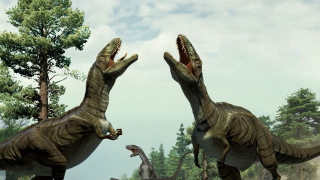
Volcanoes, asteroid may have killed dinosaurs Researchers studying ancient lava flows in India say volcanic eruptions, combined with an asteroid strike, caused the mass extinction of dinosaurs some 66 million years ago. Los Angeles Times New Zealand fish jumps out of water to hunt prey Researchers in New Zealand have discovered that the banded kokopu […]

Ancient DNA Calling Out for “De-Extinction”  — How far can or should we go?

Ancient DNA Calling Out for “De-Extinction” — How far can or should we go?

BiologyBiotechnologyEthicsEvolutionGenetics

By F. Javier Carmona

Ever since the 1993 film based on Michael Crichton’s novel Jurassic Park was released, the thought of reviving extinct species using molecular biology techniques has been on the forefront of the collective imaginary. The idea seemed pretty simple: reading the genetic code of fossilized animals would provide the instruction manual to bring them back to […]