Category archives: Philosophy of science

The ‘WarGames’ problem: AI agents don’t go rogue

The ‘WarGames’ problem: AI agents don’t go rogue

Artificial Intelligence • Philosophy of science

By Invited Researcher

Author: Deven Desai, Professor of Business Law and Ethics; Associate Director for Law, Policy, and Ethics at the Machine Learning Center, Georgia Institute of Technology AI agents don’t go rogue. That’s something only humans do. Nevertheless, a New York Times article – representative of much news coverage of AI – described an OpenAI hacking as […]
Is water H₂O? (1): From element to compound

Is water H₂O? (1): From element to compound

Chemistry • History • Philosophy of science

By Invited Researcher

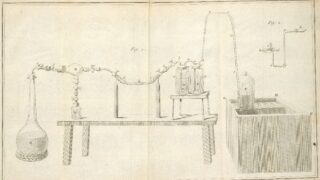
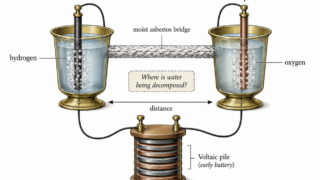
Take a glass of water. Nothing about it seems to ask for a theory. It has no colour worth naming, no dramatic smell, no visible architecture. It runs, freezes, boils, evaporates, dissolves, erodes, circulates and nourishes. It belongs to weather, geology, physiology, cooking and plumbing before it belongs to chemistry. Then science gives us the […]

Generative AI has changed mathematics forever

Generative AI has changed mathematics forever

Artificial Intelligence • Mathematics • Philosophy of science

By Invited Researcher

Author: Melissa Lee, Senior Lecturer, School of Mathematics, Monash University Some weeks ago, artificial intelligence company OpenAI announced ten advances in mathematics and computer science made with their as-yet unreleased model Astra. The discoveries cover a wide range of mathematical fields, including geometry, cryptography and coding theory. These ten are just the latest in a […]

International scientific institutions between war and peace. One hundred years of IUPAP (1)

International scientific institutions between war and peace. One hundred years of IUPAP (1)

History • Philosophy of science • Physics • Sociology

By Invited Researcher

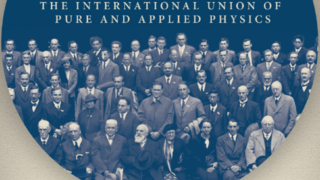
A few weeks after the invasion of Ukraine by the Russian army, many scientific institutions felt the need to issue public statements against that war. At the time, I was president of the Commission for the History of Physics within the International Union of Pure and Applied Physics (IUPAP) and, as such, I took part […]

How scientists made temperature measurable

How scientists made temperature measurable

History • Philosophy of science • Physics

By Invited Researcher

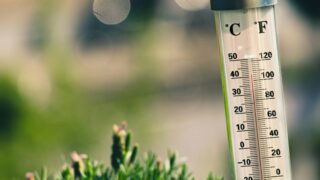
Author: José Luis Granados Mateo is a postdoctoral researcher in the Department of Philosophy at the University of the Basque Country (EHU) and a member of the Integrated History and Philosophy of Science (iHPS) research group. His work focuses on history and philosophy of science, science and values, and the epistemology of scientific practices. A […]