100-meter underground wireless communication
100-meter underground wireless communication
Korean researchers have confirmed 1 that underground wireless communication is possible, moving beyond the terrestrial wireless communication they have primarily focused on until now. This opened up a new wireless channel for confirming the survival of buried people in the event of a collapse of an underground facility such as a mine, conducting underground rescue operations, or conducting underground military operations.
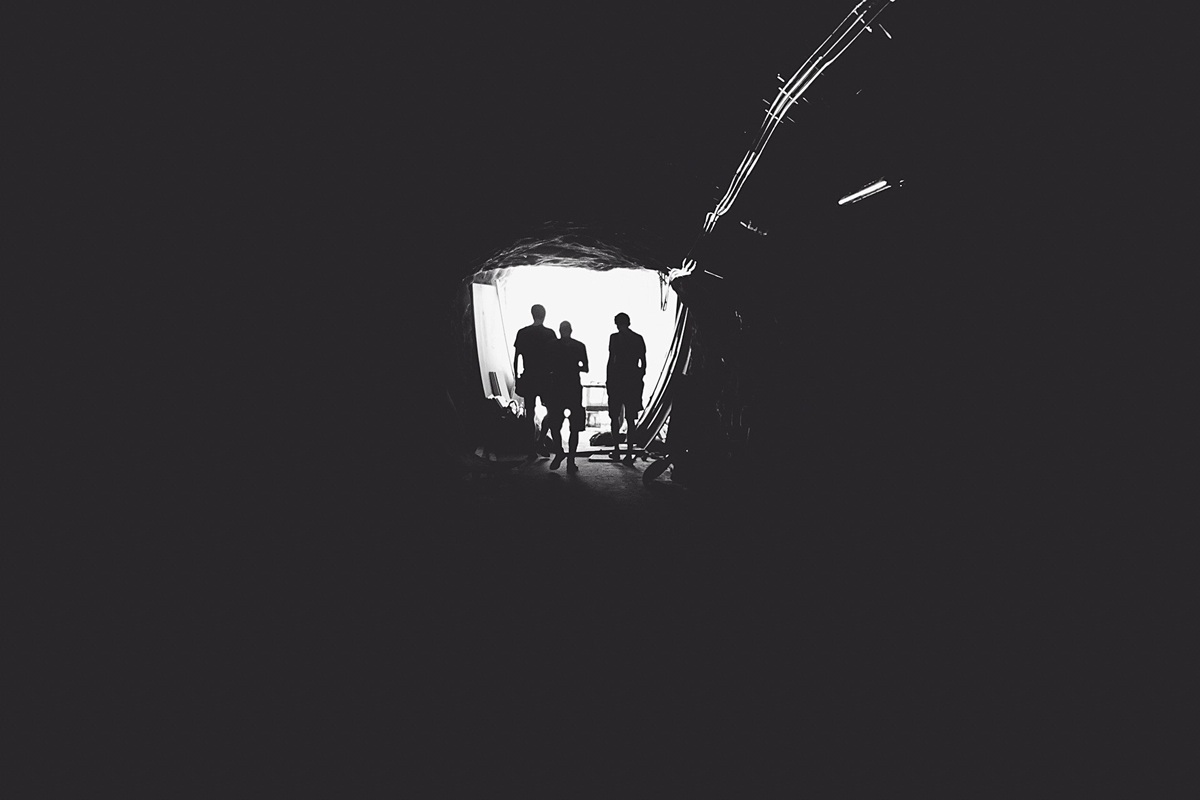
ETRI has succeeded in developing the world’s first “magnetic field underground communication source technology” that can transmit and receive voice signals 100 meters underground in a mine using a 1-meter diameter transmitting antenna and a several-centimeter-class receiving antenna.
This technology confirms the feasibility of voice transmission and reception in underground spaces previously inaccessible by wireless technology. Accordingly, this technology is expected to be applied in activities such as rescue operations, military operations, and common utility tunnel safety management.
In particular, this research is based on test results conducted in a limestone bedrock environment where underground communication is known to be virtually impossible, and is considered to have opened up a new area of underground space communication technology, such as rescue operations and military operations.
Underground mines have very severe signal attenuation, making them inaccessible using existing wireless communication technologies.
ETRI focused on the stable transmission of magnetic fields in underground media and developed a low-frequency magnetic field-based communication system.
The researchers implemented communication using a 1-meter-diameter transmitting antenna, a small magnetic field receiving sensor of several centimeters in size, a frequency of approximately 15 kHz, and a data rate of 2–4 kbps, which is sufficient for voice communication.
They successfully conducted bidirectional communication testing within a 100-meter straight-line distance between the mine entrance (ground level) and the fifth underground layer. This is the world’s first demonstration that surpasses existing tens-of-meters-level overseas research.
This outcome signifies the possibility of communication between buried people and rescue teams in situations such as underground disasters, including mine collapses.
Also, it can be widely utilized in various fields, such as responding to disasters in common utility tunnels, gas pipelines, and oil pipelines, ensuring communication continuity during military operations in underground bunker environments, and more.
ETRI explained that it is advancing technologies linked to personal devices such as smartphones, and that this will make wireless relays (APs) connecting ground and underground possible.
References
- Kye-Seok Yoon et al, (2025) Wideband Magnetic Induction Wireless Communications in Challenging Underground Environments: A Current-Driven Scheme, IEEE Internet of Things Journal doi: 10.1109/jiot.2025.3557019 ↩