Category archives: DIPC Biochemistry

Flavin bioorthogonal photocatalysis mechanism

Flavin bioorthogonal photocatalysis mechanism

Chemistry • DIPC Biochemistry • DIPC Photochemistry

By DIPC

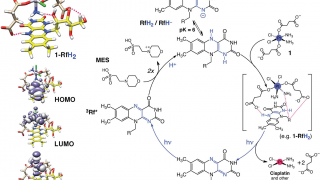
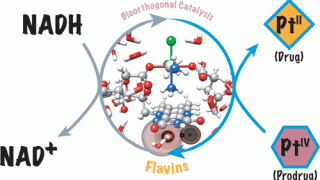
A catalyst is a substance that increases the rate of a chemical reaction without itself undergoing any permanent chemical change. As the catalyst itself takes part in the reaction it may undergo a physical change. Metal complexes are typically regarded as catalysts that convert organic substrates into more valuable compounds; however, to date, catalytic transformations […]
Huisgenases, new protein catalysts which are not enzymes

Huisgenases, new protein catalysts which are not enzymes

Chemistry • DIPC Biochemistry • Materials

By DIPC

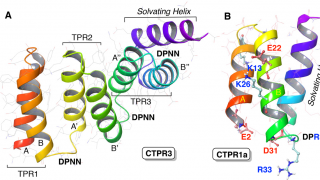
Proteins can perform a huge number of biological functions with amazing efficiency. In order to achieve these different functions, proteins rely on the precise 3D arrangement of functional groups which are referred to as the protein fold. Some of these functions include acting as a catalyst in biochemical reactions; in these cases proteins are called […]

Modified DNA catalysts for chemical reactions in water

Modified DNA catalysts for chemical reactions in water

Biochemistry • Chemistry • Condensed matter • DIPC Biochemistry

By DIPC

We all know that the main role of DNA is the storage of genomic information leading to the biosynthesis of proteins via diverse forms of RNA. In turn, proteins play multiple roles in living systems, catalysis being among the most important ones. These are the standard functions that we may find in any general chemistry […]

Riboflavin as a bioorthogonal photocatalyst

Riboflavin as a bioorthogonal photocatalyst

Chemistry • Condensed matter • DIPC Biochemistry • DIPC Photochemistry • Pharmacy

By DIPC

The combination of catalysis and bioorthogonality promises have an impact on drug discovery and bioimaging. Bioorthogonality, a term coined by Carolyn R. Bertozzi in 2003, refers to any chemical reaction that can occur inside of living systems without interfering with native biochemical processes. Hence, catalytic turnover can boost the efficiency of bioorthogonal chemical reactions, unveiling […]