Search results: plasticity

Why did curiosity kill the cat? Brain reward systems engaged in learning curious information

Why did curiosity kill the cat? Brain reward systems engaged in learning curious information

Neuroscience

By José Viosca

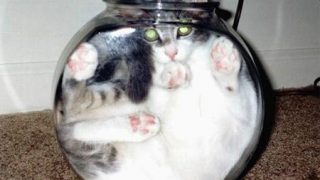
People , like cats, are curiosity-driven creatures that manifest unique inclinations towards certain stimuli. Curiosity´s unavoidability has been immortalized in the proverb of the cat. Could we be so extremely pulled by this impulse to the level of endangering ourselves for the mere sake of its satisfaction? The flip side of the coin is an […]

Young blood and old brain rejuvenation

Young blood and old brain rejuvenation

Neurobiology

By Jaime de Juan Sanz

We all have heard stories about young blood-consuming vampires remaining eternally youthful. Although lots of literary fictions have become true with scientific progress, no one would ever believe that young blood could have rejuvenative effects on the elderly. Surprisingly, this is recently becoming true with the increasing evidence in biomedical research showing that old mice […]

Epigenetic alterations in Alzheimer’s disease, nature vs. nurture on the path to dementia

Epigenetic alterations in Alzheimer’s disease, nature vs. nurture on the path to dementia

Genetics • Neuroscience

By Raúl Delgado-Morales

Nowadays there are still people that believe in destiny. However the scientific community more and more is bringing light to that subject showing that although the genetic material could program ourselves to suffer some pathologies, the day-to-day experiences are the ones that lead us towards a healthy or pathological aging. And how is that? Our […]

DNA replication: how a job is well done in just a few hours

DNA replication: how a job is well done in just a few hours

Biology • Genetics

By Daniel Moreno Andrés

Think on a cell, it is alive and, among other things, it lives to reproduce itself. The paradigm of cell division is the mitosis, a wonderful dance orchestrated to equitably distribute the possessions of the mother cell: molecular structures, machinery and, especially, the genetic material. Prior to distribute, a good mother always amasses a fortune […]

Sensory competition (1): A clash of odors

Sensory competition (1): A clash of odors

Neurobiology

By Jorge Mejías

For any animal, the real world is an ever-changing environment. Continuously, even then they are just remaining in a peaceful, awake state, animals receive multiple sensory signals encoding different features of their surroundings, or even carrying information about their own internal state (orientation, body movement, or internal temperature, for example). Some of these signals might […]

Communication breakdown: schizophrenia as the outcome of subtle neuronal dysfunction

Communication breakdown: schizophrenia as the outcome of subtle neuronal dysfunction

Biomedicine • Neurobiology

By Carlos Romá-Mateo

The functioning of the human brain goes far beyond a bunch of cells packed together; each of them is able to produce, receive, and transform electrical signals into a concrete response that affects the neighboring cells, counted by hundreds. This image is already complex, but if we say that the electric signals are constituted by […]

Reinforcement learning in the brain

Reinforcement learning in the brain

Neuroscience

By Jorge Mejías

The term reinforcement learning is well known among researchers in the areas of machine learning and artificial intelligence. It refers to a type of algorithms which are designed to solve a task by maximizing some kind of reward. In a simplified way, we could say that a typical reinforcement learning algorithm works as follows: our […]