Article archives

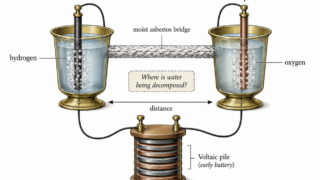
How scientists made temperature measurable

How scientists made temperature measurable

HistoryPhilosophy of sciencePhysics

By Invited Researcher

Author: José Luis Granados Mateo is a postdoctoral researcher in the Department of Philosophy at the University of the Basque Country (EHU) and a member of the Integrated History and Philosophy of Science (iHPS) research group. His work focuses on history and philosophy of science, science and values, and the epistemology of scientific practices. A […]

Secretome of dental pulp stem cells as a potential therapy for androgenetic alopecia

Secretome of dental pulp stem cells as a potential therapy for androgenetic alopecia

Biomedicine

By Invited Researcher

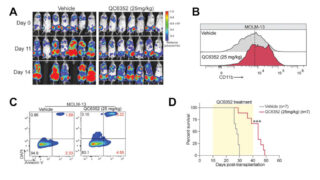
Androgenetic alopecia is characterized by a progressive hair loss. This represents a cosmetic issue, treated with a limited set of pharmacological tools such as minoxidil or finasteride. While these therapies can be effective in some patients, their results are often inconsistent and frequently accompanied by unwanted side effects. This has driven researchers to search for […]

Spin-permutation diabatization, an intuitive map for molecular magnetism

Spin-permutation diabatization, an intuitive map for molecular magnetism

ChemistryDIPC Computational and Theoretical ChemistryQuantum chemistry

By DIPC

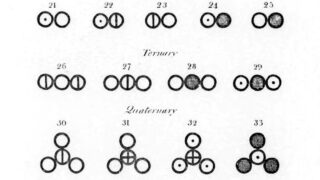
Ever since the birth of quantum mechanics in the early twentieth century, chemists have struggled with a fundamental paradox. On one hand, Lewis dot structures and molecular drawings teach us to think of electrons as localized entities—either sitting neatly in lone pairs or shared directly between two bonding atoms. On the other hand, Schrödinger’s wave […]

The giant viruses that orchestrate life in the polar regions

The giant viruses that orchestrate life in the polar regions

BiologyMicrobiology

By Invited Researcher

Authors: Thomas M. Pitot, Chercheur postdoctoral en microbiologie, Université du Québec à Chicoutimi (UQAC) and Catherine Girard, Professeure-Chercheure en microbiologie, Université Laval Viruses play a major role in the functioning of ecosystems. They profoundly influence the dynamics of microbial communities, flow of matter and global biogeochemical cycles. Yet despite their abundance and ecological importance, many […]

Understanding the risks of environmental pollutants in the human brain

Understanding the risks of environmental pollutants in the human brain

BiomedicineEnvironmentHealth

By Invited Researcher

The world’s population is growing, people are living longer, and industry continues to expand. These changes bring many benefits, but they can also increase risks to human health. Over time, people are exposed to many substances in the environment, some of which may be harmful. At the same time, greater industrial activity means more chemicals […]

Hydrogen-based steels gets boost from nickel oxide catalyst

Hydrogen-based steels gets boost from nickel oxide catalyst

CatalysisChemical engineeringChemistryMaterialsMechanical Engineering

By Mapping Ignorance

Steel and metal production are among the largest contributors to global greenhouse gas emissions, accounting for approximately 10% of global CO2 emissions. At the same time, modern technology relies on tailored steels and metals for applications in fields such as mobility, energy, infrastructure, safety and medicine. Hydrogen-based metal production offers a promising CO2-free alternative and […]

Chemical bonding as quantum entanglement

Chemical bonding as quantum entanglement

ChemistryDIPC Computational and Theoretical ChemistryQuantum chemistry

By DIPC

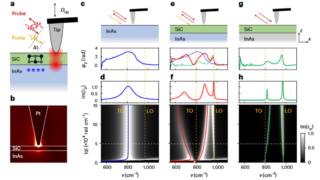
Chemical bonds are among the most familiar ideas in science. They explain why hydrogen and oxygen combine to form water, why carbon atoms build long chains in organic molecules, and why every substance has the shape and properties it does. Yet, despite their central role in chemistry, bonds are not directly observable objects. They are […]

Cosmic bombardment may have opened Earth’s crust for prebiotic chemistry

Cosmic bombardment may have opened Earth’s crust for prebiotic chemistry

BiochemistryBiologyChemistryGeosciencesPlanetary Science

By Mapping Ignorance

Asteroids and planetesimals regularly bombarded Earth between about 4.6 billion and 3.5 billion years ago, during the Hadean and Archean eons. Because few rocks today are more than 4 billion years old, our understanding of the planet’s environment during that time is limited. However, samples from the moon and its cratered surface hint at the […]