A mini-philosophy of technology (1): Ortega vs Heidegger
A mini-philosophy of technology (1): Ortega vs Heidegger
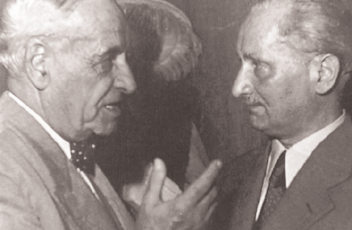
One century ago, when philosophers talked about technology, they’re not usually discussing the latest app or whether artificial intelligence will take our jobs. They were asking bigger questions: What does technology do to us as human beings? How does it change the way we see the world? And perhaps most importantly, is it helping us or hurting us? Two of the twentieth century’s biggest thinkers—Martin Heidegger from Germany and José Ortega y Gasset from Spain—gave completely opposite answers to these questions. Both men lived through times of massive technological change, including two world wars that showed just how destructive human inventions could be. But while Heidegger looked at technology and saw a kind of spiritual disaster, Ortega looked at the same thing and saw the very essence of what makes us human. Let’s explore why.
Heidegger: Technology as a Way of Hiding Reality
Heidegger starts with a deceptively simple question: what is technology really about? For Heidegger, technology isn’t primarily about machines, gadgets, or industrial processes. It’s a way of “revealing” reality—a particular lens through which we see the world. The problem, he thinks, is that this lens is totally distorted.
When we look at the world through a technological lens, everything gets reduced to one thing only: a resource. Heidegger has a fancy German word for this—Bestand, which translates roughly to “standing-reserve.” It means something that’s just there, waiting to be used, optimized, stored, exploited. Think about it: when you look at a forest through technological eyes, you don’t see an ecosystem with its own life and meaning. You see timber—raw material for paper, furniture, construction. A river isn’t a living force of nature that poets write about; it’s a source of hydroelectric power, measured in kilowatts. Even human beings don’t escape this reduction. We become “human resources,” our value determined by what we can produce or contribute to the economic machine.
As the philosopher Antonio Diéguez nicely put it, for Heidegger, modern technology has turned the whole of reality into one big gas station—a vast reservoir of energy and stuff just waiting to be pumped out and used up.
Now, why is this so bad according to Heidegger? Because this technological way of seeing actively hides other, more authentic ways of experiencing reality. Before technology took over—or alongside it, if we could still access it—there were ways of letting things be what they truly are. Take a Greek temple, for example. Heidegger would say it didn’t just provide shelter or attract tourists. It gathered together a whole world of meaning—the divine, the human, politics, nature—all in complex relationship with each other. Or think of a Van Gogh painting of a pair of peasant shoes. It’s not just showing you footwear; it opens up a world of labor, struggle, connection to the earth. These authentic experiences allow things to “flourish” according to their own purposes, not according to ours.
Technology does the opposite. It empties reality of its own purpose and turns everything into a means for ends that are external to it—namely, our ends, or more precisely, the ends of whoever has power. This critique actually echoes other philosophical movements. The Frankfurt School thinkers (people like Theodor Adorno and Jürgen Habermas) warned about the rise of “instrumental reason”—a way of thinking that evaluates everything only in terms of usefulness and efficiency, pushing out forms of reason based on mutual respect and understanding. And you could even trace this back to Jean-Jacques Rousseau in the 1700s, who argued that the arts and sciences had corrupted human morality rather than improving it.
So what’s Heidegger’s solution? He’s not suggesting we smash all machines and go back to living in caves (or was he?). Instead, he wants a radical shift in how we exist in the world. We need to stop being masters and manipulators of everything around us and instead become “shepherds of Being.” This means living in a way that lets things be, that allows them to show themselves without us constantly interfering.
And where can this authentic dwelling happen? Primarily in language. But Heidegger makes a crucial distinction here. The language of a chemistry textbook or a washing machine manual? That’s “degenerate” language for him. It only shows things from the perspective of their usefulness—it’s a language of control, not revelation. True, authentic language—the language of poets and mystics—has a higher purpose: revealing the mystery of existence without trying to dominate it.
Ortega: Technology as What Makes Us Human
If Heidegger’s vision is all about mourning a lost, pre-technological world, Ortega y Gasset offers something completely different. For Ortega, technology isn’t a mistake or a deviation from our true nature. It’s what constitutes that nature in the first place. There’s simply no such thing as humanity without technology. This isn’t just a historical observation—like, “well, humans have always made tools.” It’s deeper. Ortega argues that technology is built into the very fabric of what it means to be human.
His starting point is a basic observation about the difference between humans and other animals. Animals have to adapt to their environment. A fish is perfectly designed for water but helpless on land. A mole is king of the underground but blind to the sky. That’s their lot in life—fit the environment or die. Humans do the opposite. We don’t adapt to the environment; we adapt the environment to us. Through technology, we create what Ortega calls a “super-nature”—an artificial world layered on top of the natural one, designed to fulfill our desires and projects. We build shelters so we can live in cold climates. We create irrigation so we can grow food in deserts. We invent medicine so we can survive diseases that would otherwise kill us.
Here’s the really crucial point: for Ortega, this drive isn’t about basic biological necessity. Other creatures also satisfy their needs—birds build nests, beavers construct dams. But they don’t create technology in the human sense. What makes us human is our pursuit of the superfluous. We don’t just want to exist in the world; we want to be well in it. We want comfort, luxury, convenience, and we keep inventing new desires and new ways to satisfy them. This isn’t a corruption of our nature—it’s its highest expression. The human being, for Ortega, is an entity that permanently invents itself by inventing new needs and the means to meet them.
Of course, Ortega wasn’t naive about technology’s dark side. He was writing between the two world wars, so he’d seen plenty of evidence that our capacity for production goes hand in hand with our capacity for destruction. He also recognized that people can become enslaved by the very systems they create, turning into mere cogs in the machinery of modern production—exactly what Charlie Chaplin satirized so brilliantly in Modern Times.
He also diagnosed something he called the “mass man”—a type of person produced by too many possibilities and too much comfort. When you have everything at your disposal, you can become intellectually lazy, morally complacent, unable to understand the complex world that supports you. You have everything and yet you don’t know what to truly desire or how to reinvent yourself anymore.
But here’s the key difference from Heidegger: these dangers don’t lead Ortega to condemn technology itself. They’re challenges we need to address, not reasons to abandon the whole project. Heidegger looks backward to some imagined pre-technological golden age. Ortega looks forward to the responsible use of our technological capabilities. The task isn’t to escape technology but to understand it as the very expression of what it means to be human—and to use it with the wisdom that such a profound responsibility demands.
Let us end with the dismal comment that, being Ortega’s philosophy of technology probably the most interesting and intelligent one amongst those that emerged in the 20th century, it is sad that it has had so little influence in the literature on the topic written in English. No single reference to him appears, for example, in the Stanford Encyclopedia article on Philosophy of Technology. I hope this small post may serve to partially remedy this situation.
References
Diéguez, Antonio, 2013, “La filosofía de la técnica de Ortega como guía para la acción: una comparación con Heidegger”, Revista Internacional de Tecnología, Conocimiento y Sociedad, vol. 2.1, pp. 73-97.
Heidegger, Martin, 1977, The Question Concerning Technology and Other Essays, William Lovitt (trans.), New York: Harper & Row.
Ortega y Gasset, José, 1939, “Meditación de la técnica”, in Obras Completas, Ed. Taurus, tomo V.
Sobrino, Oswald, 2019, Technology and Human Existence. José Ortega y Gasset’s Meditation on Technology, Amazon.