MI weekly selection #215
MI weekly selection #215
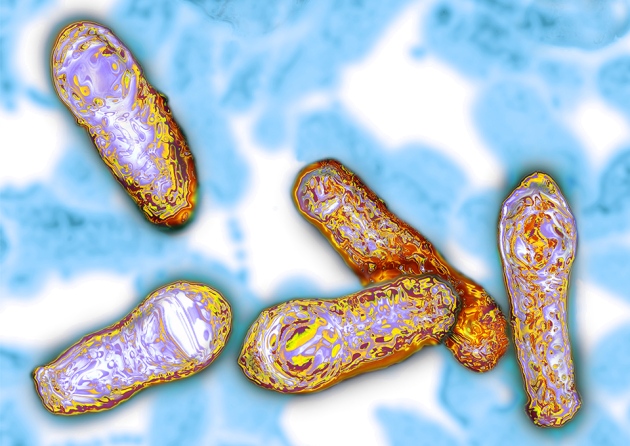
Protein found in bacteria can act like a prion
A portion of a protein within the microbe Clostridium botulinum can act like a prion when placed into yeast or Escherichia coli. This is the first time prions, which are usually found in plants and animals, have been observed in bacteria.
World’s tightest knot created by chemists
A microscopic knot created by chemists is the tightest ever made. The knot is made from a string of 192 atoms with crossing points just 24 atoms apart.
Rogue Nine: mysterious planet may have come from another solar system
The mysterious Planet Nine that may be lurking on the edges of our solar system could be a rogue planet, lost by its own solar system and attracted by the Sun’s gravity. Scientists used more than 150 computer simulations showing how rogue planets might happen upon our solar system, and they found that explanation “very plausible” for Planet Nine.
Predatory behaviour triggered in mice when brains stimulated by laser light
Stimulating the amygdala of a mouse’s brain with a special laser light can spark aggressive predatory behaviour. A virus that made mice brains responsive to blue light was introduced to the rodents, and when the light was switched on, scientists observed that the mice would hunt anything placed before them, from bottle caps to crickets, and even exhibit hunting behaviour when nothing was around.
Atari game system gets the best of neuroscientists
A simple computer — the Atari 2600 game console from 1981 — proved too complex for neuroscientists in a thought experiment. The neuroscientists chose the Atari 2600, with its classic games “Donkey Kong,” “Pitfall!” and “Space Invaders,” as their “model organism” to see if they could employ their data-analysis tools to determine how it worked.