Category archives: Philosophy of science

The rise and fall of the representational theory of measurement

The rise and fall of the representational theory of measurement

Philosophy of science

By Jesús Zamora Bonilla

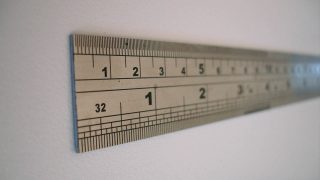
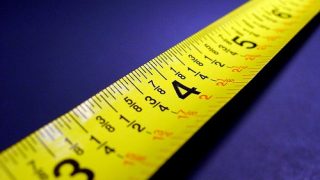
One of the most obvious differences between modern science and other kinds of knowledge, both present and past, is its massive use of mathematics, and in particular, its relying on calculations based on numerical formulae (for there can be mathematics without numbers, like in set theory, topology, or many branches of algebra, but these parts […]

The not so secret life of plants (2): Vegetal perception

The not so secret life of plants (2): Vegetal perception

NeurobiologyPhilosophy of sciencePlant biology

By Jesús Zamora Bonilla

In the first entry of this series I introduced the new research field of ‘plant neurobiology’, one of whose main sites is the Murcia University ‘Minimal Intelligence Lab’ under the direction of cognitive scientist and philosopher Paco Calvo. In that entry, I offered a brief sketch of the topics covered by the field, topics that […]

The not so secret life of plants (1): The emergence of plant neurobiology

The not so secret life of plants (1): The emergence of plant neurobiology

NeurobiologyPhilosophy of sciencePlant biology

By Jesús Zamora Bonilla

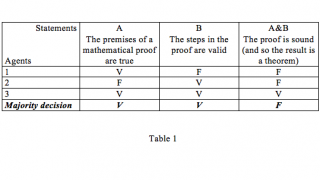
It is said of philosophers that they are ever less willing to recognise a mistake than the ordinary intellect… sorry, man on the street. Actually, an old joke tells about a university rector saying to other that his favourite department is that of mathematics, for mathematicians only ask for paper, pencils and paper bins; “oh […]

The loophole-free quantum entanglement experiment (4): The free will loophole

The loophole-free quantum entanglement experiment (4): The free will loophole

Philosophy of sciencePhysicsQuantum physics

By Daniel Manzano

In previous posts, we have discussed the two main loopholes of Bell experiments, the locality loophole, and the detection loophole. Both were closed a long time ago, but only recently they were closed in the same experiment. Let us summarize the kind of experiments we are dealing with by an example. Alice and Bob will […]

Skepticism, a short uncertain story (8): Do you have a brain or a religion?

Skepticism, a short uncertain story (8): Do you have a brain or a religion?

EpistemologyPhilosophy of science

By Jesús Zamora Bonilla

As you can imagine from the reading of the previous entries, it was by no means an easy task to transform skepticism into a weapon against religious belief. This does not entail that criticisms of religion tout court had failed to exist before, say, the late Modern Age. Not to mention again our adorable Greeks […]

Evidence-based trials: better compared than randomized

Evidence-based trials: better compared than randomized

Philosophy of science

By Jon Gurutz Izquierdo

For quite a while now, it has been assumed that Randomized Controlled Trials (RCTs) have improved the way we acquire knowledge, especially in the scientific area where this technique is the gold standard, clinical practice. From Medicine to Social sciences, evidence-based policies have turned into the widespread common ground from where to seek trustworthy information […]