Category archives: Weekly Selection

MI weekly selection #24

MI weekly selection #24

Humanities & Social SciencesScienceTechnologyWeekly Selection

By César Tomé

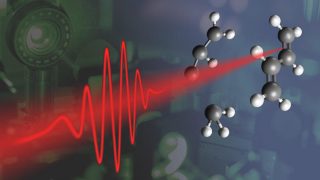
Irakurri euskaraz Graphene shown to produce ultrashort laser pulses Researchers have discovered that graphene can absorb light over a broad range of wavelengths, allowing it to be used to create ultrashort laser pulses of color. The discovery could mean that graphene, a thin, strong conductive material, could be used to create small, economical ultrashort-pulse lasers […]

MI weekly selection #24

MI weekly selection #24

Humanities & Social SciencesScienceTechnologyWeekly Selection

By César Tomé

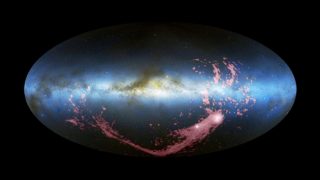
Irakurri euskaraz Competing gravity of galactic clouds probably caused band of gas A gravitational tug-of-war between the Large Magellanic Cloud and the Small Magellanic Cloud may be responsible for the huge ribbon of gas at the halo of the Milky Way. Astronomers in the U.S. and Germany measured how much oxygen and sulphur there is […]

MI weekly selection #22

MI weekly selection #22

Humanities & Social SciencesScienceTechnologyWeekly Selection

By César Tomé

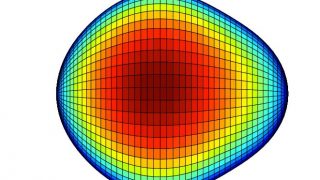
Irakurri euskaraz Pear-shaped nuclei in some atoms may help explain antimatter Researchers have used a particle accelerator called REX-ISOLDE at CERN in Switzerland to discover an atom with pear-shaped nuclei. The discovery could lead scientists to extend the Standard Model in physics and help to explain why there is more matter than antimatter in the […]

MI weekly selection #21

MI weekly selection #21

Humanities & Social SciencesScienceTechnologyWeekly Selection

By César Tomé

Irakurri euskaraz Jamestown settlers turned to cannibalism to survive, bones show The scarred skull of a 14-year-old girl reveals that English settlers in Jamestown, Va., may have engaged in cannibalism to survive. A brutal winter in 1609 brought a food shortage, killing off 80% of the population. Marks on the girl’s skull and tibia are […]

MI weekly selection #20

MI weekly selection #20

Humanities & Social SciencesScienceTechnologyWeekly Selection

By César Tomé

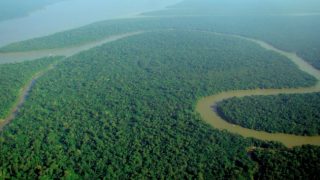
Irakurri euskaraz Malaria reduced by preserving biodiversity of forests Researchers at Brazil’s University of Sao Paulo found that malaria could be kept from spreading while still preserving the biodiversity of the Amazon rainforest. The traditional view is that clearing such forests curbed the spread of the disease. Using a mathematical model, researchers found that the […]

MI weekly selection #19

MI weekly selection #19

Humanities & Social SciencesScienceTechnologyWeekly Selection

By César Tomé

Irakurri euskaraz Could cellulose feed the world? Researchers have discovered a way to turn cellulose into starch, a technique that could be used to create more food to feed the hungry. Science Now Chun You eta al (2013) Enzymatic transformation of nonfood biomass to starch PNAS DOI: 10.1073/pnas.1302420110 Fire ants prefer shortest route in terms […]

MI weekly selection #18

MI weekly selection #18

Humanities & Social SciencesScienceTechnologyWeekly Selection

By César Tomé

Irakurri euskaraz An abrupt and widespread climate shift in the Sahara 5,000 years ago The Sahara Desert’s shift from lush grasslands to barren sands happened quickly and simultaneously across the entire region. Scientists say the brief African Humid Period began and ended suddenly, about 5,000 years ago. MIT news D. McGee, P.B. deMenocal, G. Winckler […]

MI weekly selection #17

MI weekly selection #17

Humanities & Social SciencesScienceTechnologyWeekly Selection

By César Tomé

Irakurri euskaraz Scientists use 3D printer to create networks of artificial cells Researchers have developed networks of water droplets that can act like biological tissue cells. The researchers created the networks using a three-dimensional printer. The networks can support up to 35,000 droplets and have the potential to be a scaffold for growing synthetic tissues […]

MI weekly selection #16

MI weekly selection #16

Humanities & Social SciencesScienceTechnologyWeekly Selection

By César Tomé

Irakurri euskaraz Our metastable universe Under the simplest assumptions, the measured mass of the Higgs could mean the universe is eventually unstable and destined to fall apart. Scientific American Could flow batteries back up electric grids? To power flow batteries, two aqueous electrolytes held in different tanks are pumped through a membrane into a separate […]