MI weekly selection #591
MI weekly selection #591
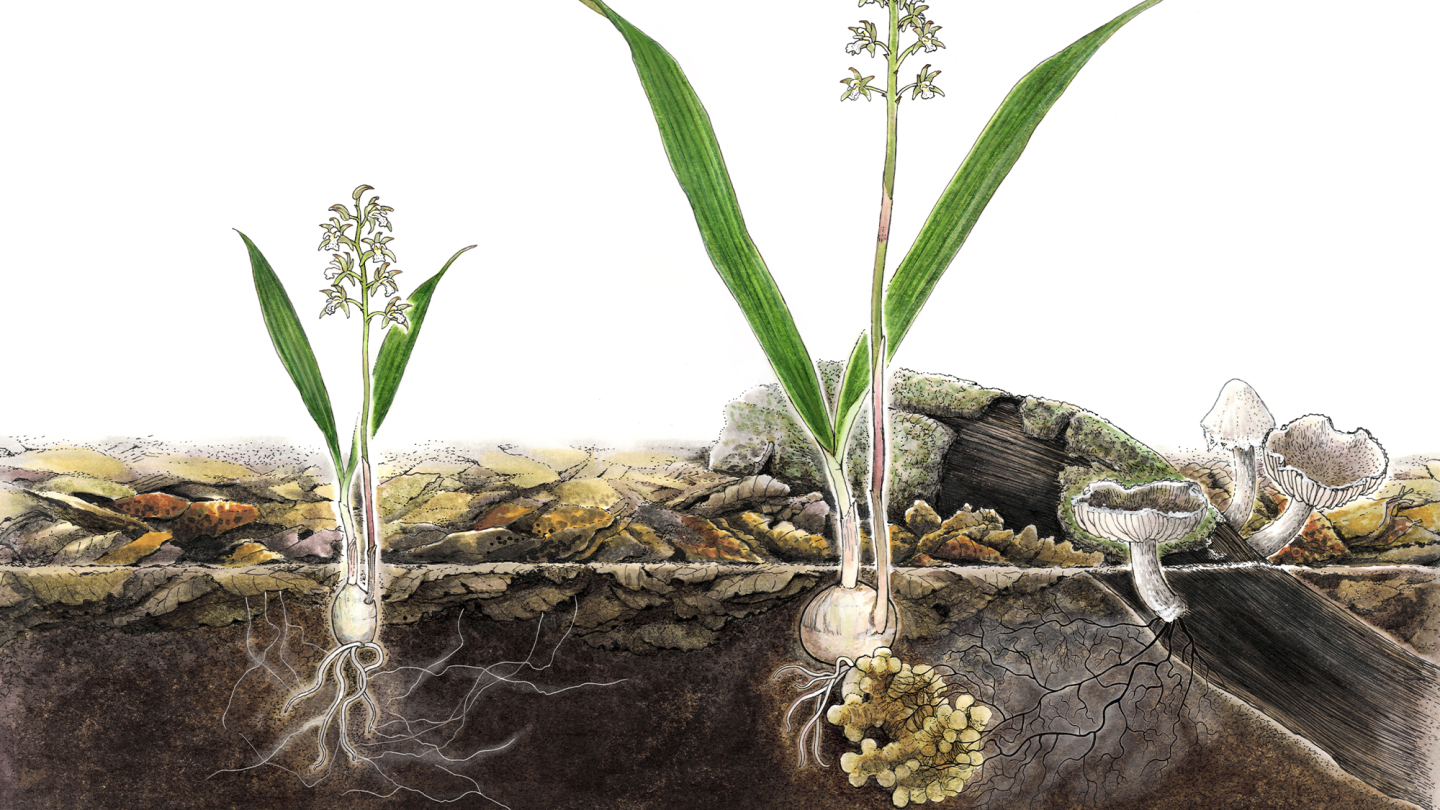
Orchids deploy parasitism to boost growth
New research on the orchid species Oreorchis patens reveals that these plants can switch to parasitism by extracting nutrients from fungi near decomposing wood, without abandoning photosynthesis. This dual strategy allows the orchids to grow larger and produce more flowers.
Full Story: Popular Science
Permafrost thaw alters size of Alaska’s lakes
Researchers have used Sentinel-2 satellite imagery to track changes in over 800,000 lakes and ponds across Alaska, revealing how permafrost thaw affects these water bodies. The study shows that thawing permafrost generally reduces lake sizes in non-glaciated areas, while in glaciated regions, lake sizes may increase.
Full Story: Eos
Harvesting fog could supply drinking water
Researchers have found that fog harvesting could supply drinking water to some of the world’s driest cities. A study in Alto Hospicio, Chile, which receives less than 5 millimeters of rain annually, shows that large-scale mesh systems used to collect water from fog could sustainably meet the needs of residents.
Full Story: BBC
New insights into Phoenix cluster’s star formation
Astronomers have used the James Webb Space Telescope to solve the mystery of star formation in the Phoenix cluster, where a supermassive black hole should inhibit such processes. The telescope’s Mid-Infrared Instrument identified cooling gas within the cluster’s cavities, crucial for star formation.
Full Story: Space
Reintroducing wolves could aid Scotland’s climate goals
Researchers propose that bringing wolves back to the Scottish Highlands could enhance carbon sequestration by controlling red deer populations, thus allowing forests to recover. This ecological approach could sequester up to one million tons of carbon dioxide per year.
Full Story: Earth