Search results: archaeological

MI weekly selection #552

MI weekly selection #552

Weekly Selection

By César Tomé

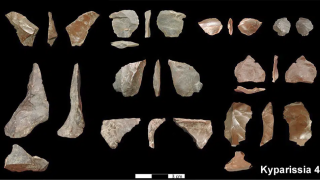
Human migration received help from Toba eruption A study on an archaeological site in Ethiopia has added to evidence that indicates the eruption of Mount Toba in Indonesia 74,000 years ago might not have been apocalyptic. The study shows humans adjusted to arid conditions after the eruption in a way that might have aided migration […]

MI weekly selection #541

MI weekly selection #541

Weekly Selection

By César Tomé

Octopus DNA helps scientists resolve geological mystery Scientists analyzed the genetic history of an octopus species living in the Antarctic to confirm a theory about when the West Antarctic ice sheet last collapsed. The Turquet’s octopus has different populations separated by the West Antarctic ice shelves today, but the creature’s family tree indicates that the […]

Lunar Anthropocene

Lunar Anthropocene

Anthropology • Geosciences

By César Tomé

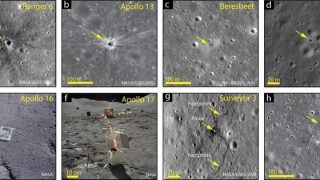
Human beings first disturbed moon dust on Sept. 13, 1959, when the USSR’s unmanned spacecraft Luna 2 alighted on the lunar surface. In the following decades, more than a hundred other spacecraft have touched the moon — both crewed and uncrewed, sometimes landing and sometimes crashing. The most famous of these were NASA’s Apollo Lunar […]

MI weekly selection #516

MI weekly selection #516

Weekly Selection

By César Tomé

Climate paradox of slashing emissions While cutting greenhouse gas emissions is necessary for reducing global warming in the long term, it may also lead to rapidly rising temperatures in the short term. R esearchers studying the emissions reduction during the pandemic show that while air pollution decreased, a lower concentration of aerosols led to a […]

Extracting the stone of madness: the art of brain surgery in the Renaissance

Extracting the stone of madness: the art of brain surgery in the Renaissance

History • Medicine

By Invited Researcher

madness Authors: Chiara Bressan, student of the European Master’s in Clinical Linguistics & Adrià Rofes, assistant professor of neurolinguistics at the University of Groningen Imagine yourself tied to a chair. You cannot move, you are fully conscious, and a strange individual behind you is about to carve into your skull. No, you are not an […]

What’s next for ancient DNA studies after Nobel Prize honors paleogenomics

What’s next for ancient DNA studies after Nobel Prize honors paleogenomics

Anthropology • Archaeology

By Invited Researcher

For the first time, a Nobel Prize recognized the field of anthropology, the study of humanity. Svante Pääbo, a pioneer in the study of ancient DNA, or aDNA, was awarded the 2022 prize in physiology or medicine for his breathtaking achievements sequencing DNA extracted from ancient skeletal remains and reconstructing early humans’ genomes – that […]

How a handful of prehistoric geniuses launched humanity’s technological revolution

How a handful of prehistoric geniuses launched humanity’s technological revolution

Anthropology • Evolution

By Invited Researcher

For the first few million years of human evolution, technologies changed slowly. Some three million years ago, our ancestors were making chipped stone flakes and crude choppers. Two million years ago, hand-axes. A million years ago, primitive humans sometimes used fire, but with difficulty. Then, 500,000 years ago, technological change accelerated, as spearpoints, firemaking, axes […]

A forgotten mangrove forest around remote inland lagoons in Mexico’s Yucatan tells a story of rising seas

A forgotten mangrove forest around remote inland lagoons in Mexico’s Yucatan tells a story of rising seas

Biology • Ecology • Geosciences • Plant biology

By Invited Researcher

The San Pedro River winds from rainforests in Guatemala through the Yucatan Peninsula in eastern Mexico. There, this peaceful river widens into a series of slow-flowing lakes. Along a remote 50-mile (80-kilometer) stretch, thousands of red mangroves – trees commonly found along tropical coastlines – line the river’s banks and gentle waterfalls. Unlike mangroves elsewhere […]

MI weekly selection #438

MI weekly selection #438

Weekly Selection

By César Tomé

Hint of our solar system’s future observed A planet the size of Jupiter circling a deceased white dwarf star about 6,500 light-years from Earth is offering a glimpse of what may happen when the sun burns out roughly 5 billion years from now. Researchers were surprised to discover that the gas giant survived its sun-like […]