Search results: autism

Dynamic diversity of astrocytes charted in new atlas

Dynamic diversity of astrocytes charted in new atlas

Neurobiology • Neuroscience

By Mapping Ignorance

When it comes to brain function, neurons get a lot of the glory. But healthy brains depend on the cooperation of many kinds of cells. The most abundant of the brain’s non-neuronal cells are astrocytes, star-shaped cells with a lot of responsibilities. Astrocytes help shape neural circuits, participate in information processing, and provide nutrient and […]


Adults with ADHD lose nearly a decade of life

Adults with ADHD lose nearly a decade of life

Medicine • Neurobiology

By Invited Researcher

Attention deficit and hyperactivity disorder, known as ADHD, is the most common neurodevelopmental disorder in children worldwide, with an estimated prevalence of around 5%. Research shows that the condition often continues into adulthood in up to 90% of diagnosed children . Although ADHD has been recognised for decades, it has recently gained much greater visibility […]

Lexical alignment: the art of speaking in sync and how our brain copes with it

Lexical alignment: the art of speaking in sync and how our brain copes with it

Neurolinguistics

By Invited Researcher

Have you ever found yourself spending five minutes talking to someone and suddenly using their words instead of your own? Say, for example, that you usually say “couch” but now suddenly you call it “sofa.” You say “TV,” but suddenly it’s “the telly.” You’ve never in your life referred to dinner as “tea” but after […]

Lysosomes: the Achilles heel of brain macrophages during a stroke

Lysosomes: the Achilles heel of brain macrophages during a stroke

Neurobiology • Neuroscience

By Invited Researcher

The brain tissue is filled by cells, the living units that enable function; the extracellular matrix, the scaffold wherein cells organize; and the blood vessels, which transport metabolic fuels such as oxygen and nutrients to the brain. Among the brain cells, we find the neurons, highly specialized cells that transmit information; and the glial cells […]

What your eyes can tell

What your eyes can tell

Neuroscience

By Rosa García-Verdugo

A common saying refers to the power of the eyes as a window inside our souls; interestingly, our eyes could also be a window into our brains, helping identify certain neurological conditions like attention deficit hyperactivity disorder (ADHD) or autism spectrum disorder (ASD). Recent work published in Frontiers in Neuroscience found distinct electrical recording signatures […]

Disinformation about COVID-19 vaccines in social networks

Disinformation about COVID-19 vaccines in social networks

Science

By Invited Researcher

Author: Martha R. Villabona works at Subdirección General de Cooperación Territorial e Innovación Educativa of the Spanish Ministry of Education and Vocational Training, where she coordinates the area of multiple literacies. Vaccination is one of the topics vulnerable to online disinformation. Although opposition to vaccines has existed since they became widespread in the 19th century […]

IQ tests can’t measure it, but ‘cognitive flexibility’ is key to learning and creativity

IQ tests can’t measure it, but ‘cognitive flexibility’ is key to learning and creativity

Neuroscience • Psychology

By Invited Researcher

IQ is often hailed as a crucial driver of success, particularly in fields such as science, innovation and technology. In fact, many people have an endless fascination with the IQ scores of famous people. But the truth is that some of the greatest achievements by our species have primarily relied on qualities such as creativity […]

Transcranial direct current stimulation and depression

Transcranial direct current stimulation and depression

Neurobiology • Neuroscience

By José Ramón Alonso

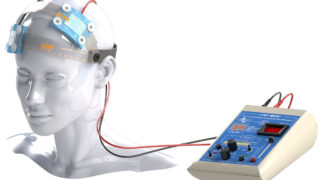
Depression is a psychiatric and psychological diagnosis that describes a temporary or permanent mood disorder characterized by feelings of dejection, unhappiness and guilt. Depressed people show a low mood and an aversion to activity and are characterized by sadness, difficulty thinking and concentrating, and a significant increase or decrease in appetite and time spent sleeping […]

Exiting dyscalculia

Exiting dyscalculia

Neuroscience

By José Ramón Alonso

The term dyscalculia of the development was proposed for the first time in 1968 by Cohn to describe a learning problem centered in the mathematical operations and in the handling of the numbers. Affected people have serious and chronic difficulties when adding or subtracting and also in the management of the calendar and clock. Dyscalculia […]