Search results: autism

MI weekly selection #314

MI weekly selection #314

Weekly Selection

By César Tomé

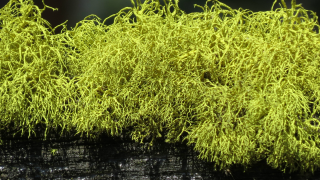
3rd fungus found in lichen Researchers have discovered a third fungus in lichen. In addition to an ascomycete and basidiomycete yeast, scientists have detected another basidiomycete, but they aren’t yet sure if this fungus has a symbiotic relationship with the lichen. The Scientist Microbes found hidden in deep-sea dolomite crystals near Japan Microbes have been […]
MI weekly selection #288

MI weekly selection #288

Weekly Selection

By César Tomé

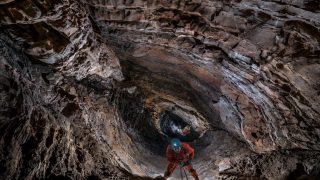
Cavers find new connections in massive Sistema Huautla Mexico’s Sistema Huautla, one of the world’s deepest cave systems, is larger than previously thought. A group of cavers and researchers found new connections while trapped by flooding inside Sistema Huautla. National Geographic Number of new flu strains found in dogs in China Three hybrid canine flu […]

MI weekly selection #271

MI weekly selection #271

Weekly Selection

By César Tomé

Some mental health conditions share genetic patterns A study of brain tissue from people with either schizophrenia, bipolar disorder, autism, depression or alcoholism suggests there are some similar gene expression patterns among those conditions. New Scientist Musk’s Tesla Roadster plots new orbital course The new projected orbit of SpaceX founder Elon Musk’s Tesla Roadster, launched […]

Voles and the chemistry of love

Voles and the chemistry of love

Neurobiology

By Isabel Perez Castro

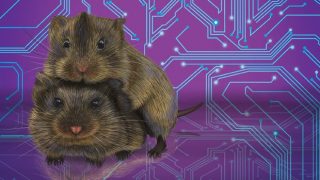
The question of how human interaction works is a neurochemical one, but it’s not easy to solve. While many experiments cannot be performed on humans or primates, smaller laboratory animals are useless for this research due to their differences with us. But prairie voles (Microtus ochrogaster) have social traits that had previously been assumed as […]

Minibrains: a present from the tooth fairy

Minibrains: a present from the tooth fairy

Neurobiology

By José Ramón Alonso

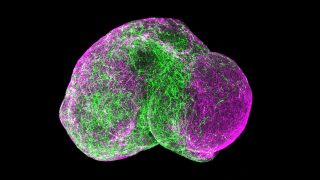
S tem cells can be cultured, multiplied and differentiated. By interacting with each other in this process of specialization they can follow organization programs that show striking similarities with what happens in the entire organism. This way you can form organoids —microscopic, yet primitively functional versions of livers, kidneys, hearts and brains grown from real […]

MI weekly selection #224

MI weekly selection #224

Weekly Selection

By César Tomé

Special genes help tardigrades survive desiccation The sturdy tardigrade, or water bear, can survive desiccation for years, pulling itself into its exoskeleton and rolling up into a ball. Unique genes create tardigrade-specific intrinsically disordered proteins that protect the water bear’s cells when the creature is dried out. The New York Times Parentage of ancient rocks […]

Bilinguals and the theory of mind

Bilinguals and the theory of mind

Neuroscience • Philosophy of science • Psychology

By José Ramón Alonso

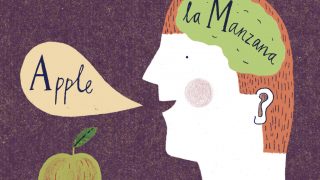
Theory of mind is the ability to attribute mental states—beliefs, intents, desires, knowledge, etc.— to oneself and others and to understand that others have beliefs, desires, intentions, and perspectives that may be different to ourselves. Attributing thoughts to others allows one to predict or explain their actions, and to posit their intentions. It enables one […]

Robotic playmates

Robotic playmates

Health • Robotics

By José Ramón Alonso

Autism spectrum disorders are a group of developmental disorders that cause lifelong disabilities. They affect people’s ability to communicate, to interact with others and to understand social cues. Affected persons have difficulties recognizing body language, making eye contact, and understand other people’s emotions, symptoms that hurt the individual’s ability to function socially, at school or […]