Search results: climate change

MI weekly selection #591

MI weekly selection #591

Weekly Selection

By César Tomé

Orchids deploy parasitism to boost growth New research on the orchid species Oreorchis patens reveals that these plants can switch to parasitism by extracting nutrients from fungi near decomposing wood, without abandoning photosynthesis. This dual strategy allows the orchids to grow larger and produce more flowers. Full Story: Popular Science Permafrost thaw alters size of […]

MI weekly selection #587

MI weekly selection #587

Weekly Selection

By César Tomé

Universe’s rapid expansion challenges existing physics Scientists have confirmed that the universe is expanding at a rate faster than current physics models can explain, based on precise measurements of the Coma galaxy cluster. This discrepancy, known as the Hubble tension, presents a significant challenge in cosmology as different methods yield conflicting expansion rates. ScienceAlert Coral […]

MI weekly selection #575

MI weekly selection #575

Weekly Selection

By César Tomé

Jupiter’s Great Red Spot oscillates in time-lapse images Jupiter’s Great Red Spot squeezes in and out as its movement speeds and slows, surprising scientists with its oscillating size. The paper puts together time-lapse footage of three months of observations from NASA’s Hubble Space Telescope, and the insights could provide cosmic context for Earth’s hurricanes. Full […]

Iberian lynx’s potential secret weapon against extinction

Iberian lynx’s potential secret weapon against extinction

Biology • Genetics

By Invited Researcher

Many large mammals have lost genetic diversity, often thanks to the actions of people shrinking their populations. The implications can be severe because without genetic diversity, a population does not have a “genetic database” to fall back on to adapt to environmental change. The Iberian lynx (Lynx pardinus) is no stranger to this reduction in […]

MI weekly selection #559

MI weekly selection #559

Weekly Selection

By César Tomé

Underground blobs may have triggered plate tectonics Giant blobs deep underground, left by Earth’s collision with the planet Theia 4.5 billion years ago, led to Earth’s first subduction about 200 million years later, which in turn triggered surface breaks that became tectonic-plate borders, according to computer modeling. Seismologists and geologists used existing data on the […]

Anthropocene rejected and what it means from an epistemological perspective

Anthropocene rejected and what it means from an epistemological perspective

Geosciences • Philosophy of science

By Invited Researcher

The geologists of the International Commission on Stratigraphy’s Subcommission on Quaternary Stratigraphy (SQS) made a substantial decision on March 4, 2024 , by rejecting the proposal to formally acknowledge the beginning of the Anthropocene—a new geological epoch attributing humanity’s emergence as the primary force shaping the Earth’s strata. This proposal, led by the Anthropocene Working […]

MI weekly selection #549

MI weekly selection #549

Weekly Selection

By César Tomé

Why did humans evolve without tails? Though humans’ ape ancestors have tails, we evolved without them due to a single gene mutation, which was pinpointed through researching the genomes of six ape species and 15 monkey species. Scientists are unsure whether becoming tailless was an evolutionary benefit or a chance mutation, but one theory is […]

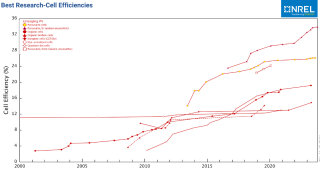
The emergence of perovskite-based photovoltaics

The emergence of perovskite-based photovoltaics

Materials

By BCMaterials

The climate crisis arising from greenhouse gas emissions has led to a greater emphasis on energy security, and affordability, to ensure a smooth energy transition. The decarbonization of the energy sector will promote a reduction in carbon emissions and will minimize catastrophic natural disasters. The deployment of low-carbon technology towards a sustainable and clean energy […]

MI weekly selection #542

MI weekly selection #542

Weekly Selection

By César Tomé

New archaeology method could confirm Bible event Thermal demagnetization, a new method used on mud bricks that are thousands of years old, may help archaeologists understand information preserved in burned material. The technique could reveal how building materials were made, and the authors of the study say in this case it corroborates the Bible’s description […]