Search results: single-cell

Noncanonical β-catenin interactions promote leukemia-initiating activity in early T-ALL

Noncanonical β-catenin interactions promote leukemia-initiating activity in early T-ALL

Biomedicine

By Invited Researcher

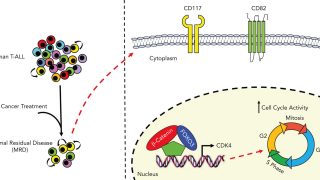
T-cell acute lymphoblastic leukemia (T-ALL) is a hematological malignancy that affects both children and adults. Although with current chemotherapy regimens cure is achieved in ~80% of pediatric patients, adults fare more poorly with only 40% 5-year overall survival . Restricted cellular subsets with asymmetrically enriched leukemia-initiating cell (LIC) activity have been reported in human and […]

A dog parasite could help fight incurable cancers

A dog parasite could help fight incurable cancers

Biology • Biomedicine • Medicine

By Invited Researcher

Cancers are the second leading cause of death in the world, after cardiovascular diseases. Their seriousness lies in their diversity – some can be effectively treated with surgery, chemotherapy and radiotherapy, while others respond poorly or not at all. Improving the treatment of these diseases is therefore a major challenge. For several years, the development […]

Bio-mining pyrite with no oxygen

Bio-mining pyrite with no oxygen

Biochemistry • Biology • Chemistry • Geosciences

By César Tomé

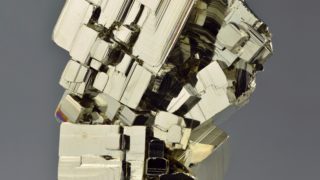
Pyrite, also known as “fool’s gold,” is an abundant iron sulphide mineral in the Earth’s crust. All organisms need iron and sulphur to grow. Because pyrite does not dissolve in oxygen-free conditions, scientists previously thought that organisms could not use pyrite in the absence of oxygen. Research shows that certain single-celled microorganisms can dissolve pyrite […]

MI weekly selection #498

MI weekly selection #498

Weekly Selection

By César Tomé

Several genes play a role in whales’ enormous size Biologists have identified evolutionary changes in DNA that allowed whales to grow larger over time. The researchers found that despite having bigger bodies with more chances for cancer to develop in cells, whales have genes that not only contribute to body size but reduce the impacts […]

Fine-tuning wine fermentation processes

Fine-tuning wine fermentation processes

Chemical engineering • Food processing • Mathematics

By BCAM

Fermentation is a form of anaerobic respiration occurring in certain microorganisms, like yeasts. Many processes arising in diverse contexts can be classified as fermentation processes, such as manufacturing of some food products (baking, wine and beer industries are based on them) and of some industrial and pharmaceutical chemicals. Alcoholic fermentation comprises a series of biochemical […]

MI weekly selection #483

MI weekly selection #483

Weekly Selection

By César Tomé

Long-lost moon may have been cause of Uranus’ stark tilt Astronomers have long suspected that a series of giant impacts early in the planet’s formation flipped Uranus on its side, but new research suggests the planet’s 98-degree-tilt could have been caused by a long-lost moon. It is possible that the tilt was caused by the […]

NanoNeuro is a thing

NanoNeuro is a thing

DIPC Neurophysics

By DIPC

Because of their unique physical properties, nanomaterials have intrinsic advantages as biosensors and actuators, and they may be applicable to humans without the need for genetic modifications. It follows, then, that nanoscience could make major methodological contributions to the future of biomedical sciences, especially neuroscience. Meet NanoNeuro , a new field defined as the intersection […]

Seti: how microbes could communicate with alien species

Seti: how microbes could communicate with alien species

Astronomy • Biology • Microbiology • Physics

By Invited Researcher

Authors: Predrag Slijepcevic, Senior Lecturer in Biology, Brunel University London and Nalin Chandra Wickramasinghe, Honorary Professor, University of Buckingham Are we alone in the universe? The famous Seti (Search for Extraterrestrial Intelligence) programme has been trying to answer this question since 1959. American astronomer Carl Sagan, and many others, believed that other human-like civilisations must […]