Why storing heat may be as important as storing electricity
Why storing heat may be as important as storing electricity
Author: Tamara Cruz Tena, strategy consultant, CIC energiGUNE
When energy storage is discussed in the context of the energy transition, the conversation almost invariably turns to electricity. Solar and wind power have made the temporal mismatch between energy production and energy demand one of the defining challenges of low-carbon energy systems, and technologies capable of storing electrical energy have consequently become central to discussions about decarbonization.
Yet this emphasis on electricity raises an interesting question. If a substantial fraction of the energy ultimately consumed by modern societies is required not as electricity but as thermal energy, should future energy systems necessarily store energy in electrical form?
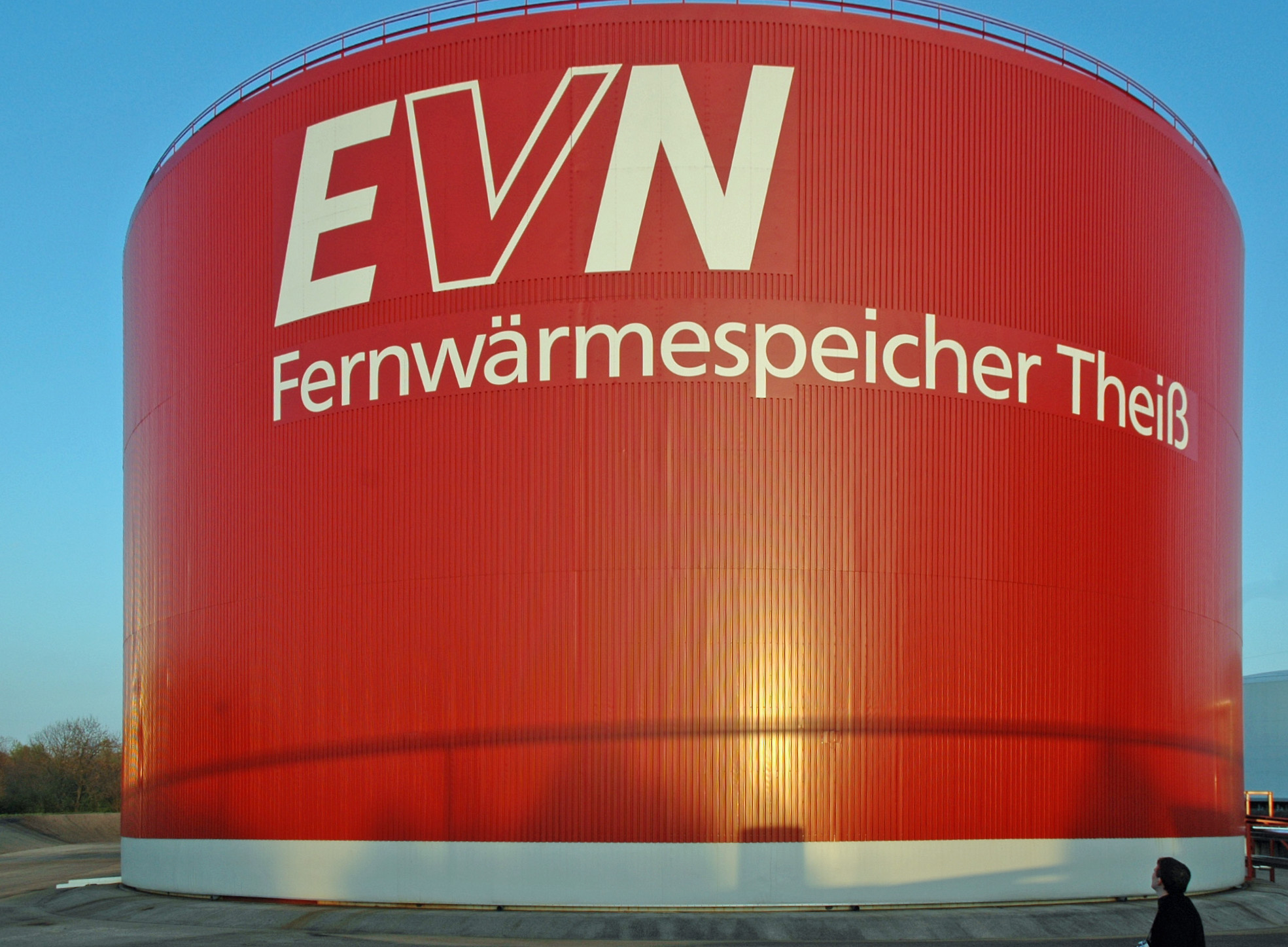
The question may appear deceptively simple. Electricity plays a visible role in modern economies, powering everything from communications and transportation to industrial equipment and domestic appliances. Thermal energy, by contrast, often remains hidden within industrial processes, heating systems and manufacturing operations. Nevertheless, many of the activities that sustain modern societies depend primarily on heat rather than electricity.
Steelmaking, cement production, chemical manufacturing, food processing, paper production and numerous other industrial activities require thermal energy delivered under specific conditions of temperature, power and duration. In many cases, fossil fuels have historically fulfilled this role not because alternative energy sources were unavailable, but because combustion offers a relatively direct means of producing high-temperature thermal energy where and when it is required.
As renewable electricity becomes increasingly available, this situation may encourage a different way of thinking about energy storage. Rather than focusing exclusively on how electricity can be stored and later returned to the grid, it may also be worth considering whether part of that energy could instead be stored in forms intended for later thermal use.
Such an approach would not eliminate the need for batteries, nor would it necessarily be appropriate for every application. It does, however, suggest that thermal energy storage may represent a distinct scientific and engineering problem whose requirements differ from those associated with conventional electrical storage technologies.
Storing energy for later thermal use
At the heart of the discussion lies a relatively straightforward physical observation. Electrical energy can be converted into thermal energy with high efficiency through a variety of heating technologies. Once this conversion has taken place, the resulting energy may be stored within a material or chemical system and later recovered when thermal energy is required.
Importantly, what is stored is not temperature itself. Temperature is an intensive thermodynamic property and therefore cannot be accumulated in the same way as energy. Instead, thermal energy storage systems retain energy through changes in the state of a material, whether by increasing its temperature, inducing a phase transition or driving a reversible chemical reaction.
The simplest of these approaches is generally known as sensible heat storage. In such systems, energy is stored through an increase in the temperature of a material. Water provides the most familiar example, although industrial applications may employ molten salts, rocks, ceramics, graphite or other materials capable of operating under more demanding thermal conditions. The amount of energy stored depends on the mass of the storage medium, its heat capacity and the temperature interval over which it operates.
A second possibility involves latent heat storage, where energy is absorbed or released during a phase transition. Because phase transitions may involve substantial enthalpy changes while temperature remains relatively constant, these systems can store significant amounts of energy within comparatively narrow temperature ranges. This characteristic has made phase change materials attractive for applications in which thermal energy must be supplied near a particular operating temperature.
Even more ambitious concepts involve thermochemical storage. In these systems, thermal energy drives reversible chemical reactions, allowing energy to be stored in chemical form and later recovered when the reverse reaction occurs. Under certain conditions, such approaches could potentially enable storage over much longer timescales than conventional thermal systems, although their practical implementation remains associated with significant scientific and engineering challenges.
At first sight, these approaches may appear to offer relatively straightforward solutions. However, as is often the case in energy research, the situation becomes considerably more complicated once practical constraints are taken into account.
Materials operating at elevated temperatures may experience degradation through corrosion, thermal fatigue, creep, phase instability or other mechanisms whose importance depends on the operating conditions and storage medium. Repeated thermal cycling can gradually alter material properties, while large-scale systems introduce additional challenges related to heat transfer, containment and long-term reliability. In thermochemical systems, reaction kinetics, cycling stability and reactor design may become equally important considerations.
As a result, the central question is not whether thermal energy can be stored. It clearly can. The more difficult question is whether such storage can remain technically reliable, economically viable and operationally robust under the conditions required by industrial applications.
A maturity paradox
Interestingly, many of the technologies that could contribute to this objective are no longer at an early stage of development. Electric heat pumps, electric boilers, electric resistance heaters and several forms of sensible and latent thermal energy storage have reached relatively high levels of technological maturity. From a purely technological perspective, the challenge is therefore not always one of invention. In many cases, the relevant technologies already exist.
Yet this observation introduces a different question. If a number of these technologies are already mature, why does their future role remain difficult to assess?
Part of the answer may lie in the complexity of modern energy systems themselves. The behaviour of a heat pump, an electric boiler or a thermal storage unit can often be described in considerable detail. However, energy systems contain thousands of interacting components operating across multiple spatial and temporal scales. Incorporating detailed representations of thermal technologies into large-scale energy models may therefore become computationally challenging, particularly when such models are intended to optimize entire electricity, heating and industrial sectors simultaneously.
This creates an interesting tension. The physical behaviour of thermal technologies is often governed by complex thermodynamic processes, yet large-scale energy planning frequently requires simplified mathematical representations that remain computationally tractable. Determining how much detail can be removed without losing essential information remains an active area of research and may influence how the future role of thermal energy storage is assessed.
This distinction may help explain why thermal energy storage has attracted increasing scientific interest in recent years. A significant fraction of industrial energy demand is thermal rather than electrical, and many industrial processes require heat directly. Under such circumstances, converting electrical energy into thermal energy, storing it, and subsequently using it as heat may sometimes prove more practical than repeatedly converting energy between different forms.
Beyond storage
The implications extend beyond individual storage technologies. Some researchers have suggested that thermal energy storage could also contribute to system flexibility by partially decoupling heat demand from the instantaneous availability of renewable electricity. During periods of abundant renewable generation, electrical energy could be converted into thermal energy and stored for later use. If such approaches prove technically and economically viable at scale, they could potentially help reduce some of the temporal mismatches that arise in renewable-dominated energy systems.
Whether this possibility ultimately becomes significant remains uncertain. Industrial sectors differ substantially in their temperature requirements, operating schedules and process constraints. Storage technologies that appear promising in one context may prove less suitable in another. Likewise, systems that perform well under laboratory conditions may encounter unexpected limitations when deployed at industrial scales.
For this reason, thermal energy storage may be best understood not as a single technology but as a broad collection of approaches aimed at addressing a common problem. The details differ from one system to another, but the underlying question remains remarkably simple: if much of the energy consumed by modern societies is ultimately required in thermal form, what is the most effective way of ensuring that such energy remains available when it is needed?
Viewed from this perspective, the challenge is not simply one of storage. The objective of an energy system is not merely to retain energy for later use, but to ensure that energy remains available in a form compatible with the process that ultimately consumes it. In some cases that form may be electrical. In others, it may be thermal. Determining when each option is preferable remains an active area of research.
Whether any particular thermal energy storage technology ultimately becomes a major component of future energy systems remains unclear. What already appears increasingly difficult to ignore, however, is the observation from which the entire discussion emerges. A substantial fraction of the energy consumed by modern societies is required in thermal form. This fact alone may justify a closer examination of how such energy can be stored, transported and recovered efficiently. As researchers continue to investigate the materials, mechanisms and constraints involved, thermal energy storage may offer a useful reminder that decarbonization involves more than replacing one source of electricity with another. It may also require a deeper understanding of how energy itself is used.
The BRTA is a consortium that remains a step ahead of future socio-economic challenges worldwide and in the Basque Autonomous Community; it addresses them through research and technological development, thus projecting itself internationally. The BRTA centres collaborate to generate knowledge and transfer it to Basque society and industry so as to make them more innovative and competitive. The BRTA is an alliance of 17 R&D centres and cooperative research centres with the support of the Basque Government, the SPRI and the Chartered Provincial Councils of Araba, Bizkaia and Gipuzkoa.

References
- Maruf, M. N. I., Morales-Espana, G., Sijm, J., Helistö, N., and Kiviluoma, J. (2021) Classification, potential role, and modeling of power-to-heat and thermal energy storage in energy systems: A review. arXiv. Available at: https://arxiv.org/abs/2107.03960
- CIC energiGUNE (2022) Thermal energy storage: a key factor in energy transition. Available at: https://cicenergigune.com/en/blog/thermal-energy-storage-key-energy-transition
- International Energy Agency (2024) Energy Efficiency 2024. International Energy Agency. Available at: https://www.iea.org/reports/energy-efficiency-2024