Category archives: Genetics

Dirty mice are the next revolution in immunology research

Dirty mice are the next revolution in immunology research

GeneticsHealthMedicineMolecular biology

By Sergio Laínez

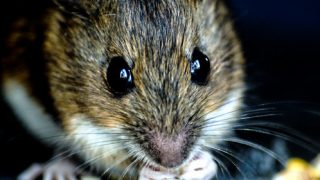
Laboratory mice are one of the most valuable tools scientists rely on to understand how pathologies work. In order to find a cure for a disease, we need to have comprehensive knowledge of the physiological processes which are impaired. For instance, we can manipulate mice genetically to assess the effect of either the deletion, overexpression […]

SNPs, RNA and Celiac Disease

SNPs, RNA and Celiac Disease

BiochemistryBiomedicineGeneticsHealth

By Invited Researcher

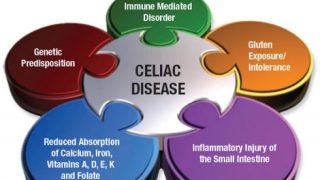
Around 80% of the single nucleotide polymorphisms (SNPs) associated to many human diseases map to non-coding regions. Long non-coding RNAs (lncRNAs) represent a large portion of non-coding regions across the genome, however the link between the disease-associated SNPs on lncRNA expression or function, and the implications for disease, remain uncharacterized. Celiac disease is complex immune […]

Can a mouse stammer?

Can a mouse stammer?

BiologyGeneticsNeurobiology

By José Ramón Alonso

Stammering, stuttering or alalia literalis is a speech disorder characterized by involuntary repetition and prolongations of sounds, syllables, words or phrases and involuntary silent pauses or blocks where the affected person is unable to produce sounds. Around 1-in-20 children aged 2 to 5 years old will stammer at some moment, but most grow out of […]

Allergies, heart conditions, depression… Should we really blame our neanderthal grandparents?

Allergies, heart conditions, depression… Should we really blame our neanderthal grandparents?

GeneticsHealth

By Isabel Perez Castro

The finding that modern humans coexisted and mated with Neanderthals 50000 years ago was a breakthrough when it was announced in 2010. As a result of interbreeding, the genomes of all modern Eurasians contain a small Neanderthal DNA load that has been calculated to be between 1.5% and 4%. Most Africans, however, lack this DNA […]

Transcriptional noise seems to correlate with more closed chromatin environments.

Transcriptional noise seems to correlate with more closed chromatin environments.

GeneticsMolecular biology

By Daniel Moreno Andrés

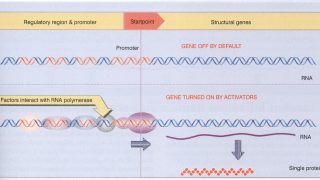
I still remember the order and control exhibited by the chemistry of life that they explained to me in the early years of college. For me, the regulation of gene expression was the supreme paradigm of organization. The promoters, those regulatory sequences preceding genes, were unmistakable ports where plenty of proteins (transcription factors and polymerases) […]

Quantum Physics + Genetic Engineering = Enhanced Energy Transport

Quantum Physics + Genetic Engineering = Enhanced Energy Transport

BiologyGeneticsQuantum physics

By Daniel Manzano

A hot topic of research nowadays is the energy transfer in quantum systems. One important reason for this interest is the famous 2007 experiment that suggests quantum effects in the dynamics of the photosynthetic complex FMO, from the green sulfur bacteria . This complex plays a crucial role in natural photosynthesis transferring an excitation from […]

Did the first Americans come from Bilbao?

Did the first Americans come from Bilbao?

AnthropologyArchaeologyGeneticsHistory

By Jesús Zamora Bonilla

As everybody knows, the people from Bilbao are born wherever they want. And, according to one of the most captivating conjectures in contemporary archaeology, this might have been so in a totally unexpected way even from many millennia ago. The conjecture I am referring to is the ‘Solutrean hypothesis’ about the first human population of […]

Ancient DNA Calling Out for “De-Extinction”  — How far can or should we go?

Ancient DNA Calling Out for “De-Extinction” — How far can or should we go?

BiologyBiotechnologyEthicsEvolutionGenetics

By F. Javier Carmona

Ever since the 1993 film based on Michael Crichton’s novel Jurassic Park was released, the thought of reviving extinct species using molecular biology techniques has been on the forefront of the collective imaginary. The idea seemed pretty simple: reading the genetic code of fossilized animals would provide the instruction manual to bring them back to […]

Genetic engineering of insect-free plants

Genetic engineering of insect-free plants

BiotechnologyGeneticsPlant biology

By Daniel Marino

Plants are sessile organisms, which means they can´t move around. Of course, they have some types of movements like turning towards the sun but the place where the seed germinates the plant will stay during their entire life cycle. Obviously, this fact has important consequences on how plants respond upon variations of their surrounding environment […]