Article archives

MI weekly selection #123

MI weekly selection #123

Humanities & Social SciencesScienceTechnologyWeekly Selection

By César Tomé

Young galaxy clusters discovered More than 200 young galaxy clusters have been documented by astronomers using data gathered by the Planck and Herschel space telescopes. The researchers have released photos of the clusters, which will be studied further in the hope answers can be found to many cosmic questions like how galaxies grow and the […]

Polyoxometalates, the other discovery by D’Elhuyar brothers

Polyoxometalates, the other discovery by D’Elhuyar brothers

Chemistry

By Aroa Pache

Not many people know that polyoxometalates (POMs) discovery dates back to 1783 and that they were the D´Elhuyar brothers ( Juan José D´Elhuyar (Logroño, 1754 ) and Fausto D´Elhuyar (Logroño, 1755) who discovered a yellow spicy/bitter tasting salt from the reaction of ammonium molybdate with phosphoric acid which is now known as ammonium 12-phosphomolybdate, (NH […]

MI weekly selection #122

MI weekly selection #122

Humanities & Social SciencesScienceTechnologyWeekly Selection

By César Tomé

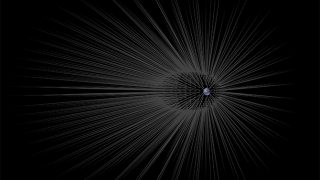
Dark matter detected as it coasts through galaxy collisions Dark matter appears to drift straight through galactic collisions, barely interacting with anything, including other dark matter, according to scientists who detected the mysterious stuff by the way it bends nearby light paths. Researchers used visible light spied by the Hubble Space Telescope and X-rays by […]

The true colour of chlorophylls

The true colour of chlorophylls

BiologyChemistryMaterials

By DIPC

Most leaves are various shades of green. This is due to the chlorophylls. The name chlorophyll comes from the Greek words chloros (green) and phyllon (leaf). There are six types of chlorophylls in plants. The two main chlorophylls are chlorophyll a and chlorophyll b. Chlorophyll a absorbs purple and orange light the most. Chlorophyll b […]

What is consciousness? (2): Is the hard problem really hard?

What is consciousness? (2): Is the hard problem really hard?

NeurosciencePhilosophy of science

By Jesús Zamora Bonilla

As we saw in the previous entry of this series, philosophers of mind usually distinguish between what (after David Chalmers) they called the ‘easy’ and the ‘hard’ problem of consciousness. The ‘easy’ problem refers to how to explain the functioning of the brain: how does it manage to do things that seem to require some […]