Article archives

MI weekly selection #216

MI weekly selection #216

Weekly Selection

By César Tomé

Massive crack in Antarctic ice shelf grows The giant crack in the Larsen C Ice Shelf in Antarctica is continuing to grow, threatening to soon break off a large iceberg. The crack has grown about 6.2 miles, or about 10 kilometers, since the beginning of the year. BBC 3D-printed model helps researchers understand ancient portable […]

Columbus and the shape of the Earth, a “Holywood” story

Columbus and the shape of the Earth, a “Holywood” story

HistoryPhilosophy of science

By Jesús Zamora Bonilla

It is said that Washington Irving’s biography of Christopher Columbus, published in 1828, was the work that started the legend that the discoverer of America was the person that convinced the ‘nearly medieval’ Europeans of his time of the sphericity of the earth, a legend that has captured the popular imagination since then. Nothing could […]

MI weekly selection #215

MI weekly selection #215

Weekly Selection

By César Tomé

Protein found in bacteria can act like a prion A portion of a protein within the microbe Clostridium botulinum can act like a prion when placed into yeast or Escherichia coli. This is the first time prions, which are usually found in plants and animals, have been observed in bacteria. Nature World’s tightest knot created […]

A route to bulk carbyne

A route to bulk carbyne

ChemistryCondensed matter

By DIPC

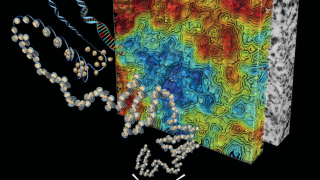
Carbon has four valence electrons. To fill its octet, it requires four additional electrons, which can be obtained through the formation of four covalent bonds. Carbon forms single, double, and triple bonds to achieve a filled octet. As a result, carbon can have a tetrahedral, trigonal planar, or linear geometry, respectively. A unique feature of […]

The #microMOOCSEM initiative: Twitter as a tool for teaching and communicating science

The #microMOOCSEM initiative: Twitter as a tool for teaching and communicating science

EducationMicrobiology

By Ignacio López-Goñi

An innovative group of 30 international education professionals taught the first online microbiology course using Twitter, #microMOOCSEM, complete with lectures, videos, news, and more, with some classes reaching over 260,000 impressions and 3,700 retweets. Currently, most students are users of social networks like YouTube, Facebook or Twitter and have incorporated them, often unconsciously as powerful […]